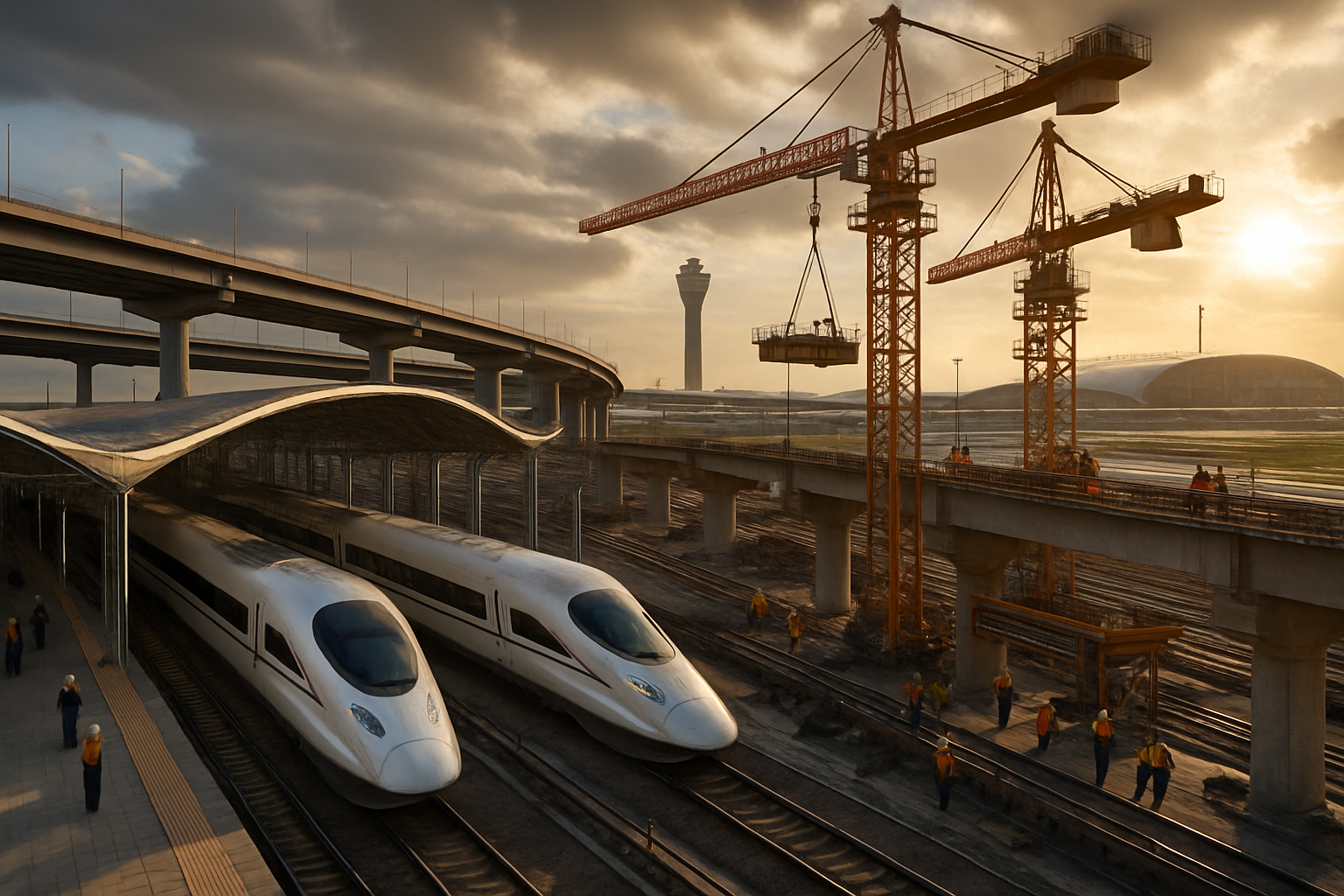
A historic wave of transportation infrastructure investment is reshaping global connectivity, with countries from East Timor to Australia committing hundreds of billions to modernize airports, railways, and public transit systems amid growing recognition that robust infrastructure underpins economic competitiveness and climate resilience.
East Timor's Airport Transformation
In a significant milestone for the young nation, East Timor's Minister of Transportation and Communications, Miguel Marques Gonçalves Manetelu, signed a major construction contract on February 20, 2026, at the East Timor Embassy in Tokyo. The agreement with Japan's TOA Corporation, a specialized maritime and port engineering company, will deliver a new passenger terminal for the Presidente Nicolau Lobato International Airport in Dili.
This development represents more than just infrastructure—it symbolizes East Timor's strategic partnership with Japan and the nation's commitment to enhancing its connectivity with the broader Asia-Pacific region. The project is expected to significantly boost the country's tourism potential and improve access for business travelers, contributing to economic diversification efforts.
Australia's Railway Growing Pains
Meanwhile, Australia's transportation infrastructure expansion faced immediate challenges as the newly opened Midland station experienced significant disruptions during its first weekday of operation. Trains were cancelled for approximately 40 minutes during Monday morning peak hour on February 23, 2026, causing confusion among passengers and forcing hundreds onto rail replacement buses.
The incident highlights the complex logistical challenges inherent in major infrastructure transitions, even in developed nations with sophisticated transportation networks. Despite the temporary setbacks, the Midland station opening represents part of Australia's broader commitment to expanding urban rail networks to accommodate growing metropolitan populations.
Global Infrastructure Renaissance
These developments occur within the context of an unprecedented global infrastructure surge, with worldwide investment exceeding $570 billion in 2026. This investment wave spans continents and encompasses diverse projects from Vietnam's $120 billion expressway network expansion to Saudi Arabia's high-speed railway agreements with Qatar.
The scale of current infrastructure development represents a fundamental shift in how nations view connectivity. No longer seen merely as physical assets, modern transportation networks are increasingly recognized as strategic foundations for economic competitiveness, climate adaptation, and international cooperation.
Technology Integration and Smart Systems
Contemporary infrastructure projects distinguish themselves through sophisticated technology integration from the design phase. Modern transportation systems incorporate real-time monitoring, predictive maintenance capabilities, digital payment systems, and environmental optimization features that were retrofitted additions in previous generations.
However, the global memory crisis—with semiconductor prices increasing sixfold—is affecting control system implementations across projects worldwide. This supply chain challenge demonstrates the interconnected nature of modern infrastructure development, where technological components sourced globally can impact local construction timelines.
"Infrastructure is no longer just about moving people from point A to point B. It's about creating integrated systems that support economic development, environmental protection, and social connectivity simultaneously."
— Infrastructure Development Analyst
Climate Adaptation Imperatives
The current infrastructure boom occurs against the backdrop of accelerating climate change, with January 2026 marking the 18th consecutive month of temperatures exceeding 1.5°C above pre-industrial levels. This climate reality is reshaping infrastructure design requirements, forcing engineers to plan for future weather conditions rather than historical patterns.
Recent extreme weather events across Europe, including Storm Nils and the succession of severe storms that caused infrastructure damage from Portugal to Poland, underscore the urgent need for climate-resilient transportation networks. Projects now routinely incorporate flood management systems, enhanced drainage, weather-resistant materials, and backup power systems.
Regional Integration and Economic Multipliers
Infrastructure development in 2026 emphasizes regional integration objectives. East Timor's airport expansion supports ASEAN connectivity goals, while Australia's urban rail projects align with metropolitan growth strategies. These initiatives create significant economic multiplier effects beyond construction employment, including reduced logistics costs, enhanced market access, and improved competitiveness.
The interconnected nature of modern infrastructure is evident in cross-border coordination requirements. Projects increasingly require international cooperation for safety standards, emergency response protocols, and technical compatibility across national boundaries.
Financing Innovation
The current infrastructure wave demonstrates evolved financing mechanisms combining public-private partnerships, international development cooperation, and innovative funding structures. East Timor's Japanese partnership exemplifies successful bilateral cooperation models, while Australia's metropolitan rail expansion represents sophisticated domestic investment strategies.
European Union structural funds, World Bank development programs, and bilateral partnerships are enabling developing nations to undertake infrastructure projects previously beyond their individual capabilities. This financing evolution reflects growing international recognition that connectivity gaps in one region affect global economic efficiency.
Implementation Challenges
Despite unprecedented investment levels, infrastructure development faces systematic challenges. Australia's Midland station disruptions illustrate that even well-funded projects in developed economies encounter operational complexities during transitions. These challenges include technical integration difficulties, workforce coordination requirements, and the need to maintain existing services during construction.
Environmental compliance, community engagement, and stakeholder consultation have become essential project components, often extending timelines but ultimately ensuring better outcomes. Transparent procurement processes and quality control measures are critical for maintaining public confidence in major infrastructure investments.
Future Trajectory
The infrastructure developments of February 2026 are establishing precedents that will influence global transportation policy for decades. Success factors emerging from current projects include comprehensive planning from initial stages, international cooperation frameworks, adaptive management approaches, and balanced integration of immediate needs with long-term sustainability considerations.
As nations navigate the intersection of rapid urbanization, climate adaptation requirements, and technological advancement, the transportation infrastructure decisions made in 2026 will determine whether societies can develop the adaptive capacity necessary to thrive in an interconnected, climate-challenged world.
The convergence of unprecedented investment, technological innovation, and environmental awareness represents a defining moment for 21st-century infrastructure development. The success or failure of current projects will influence global connectivity patterns, economic competitiveness, and climate resilience strategies well into the future.