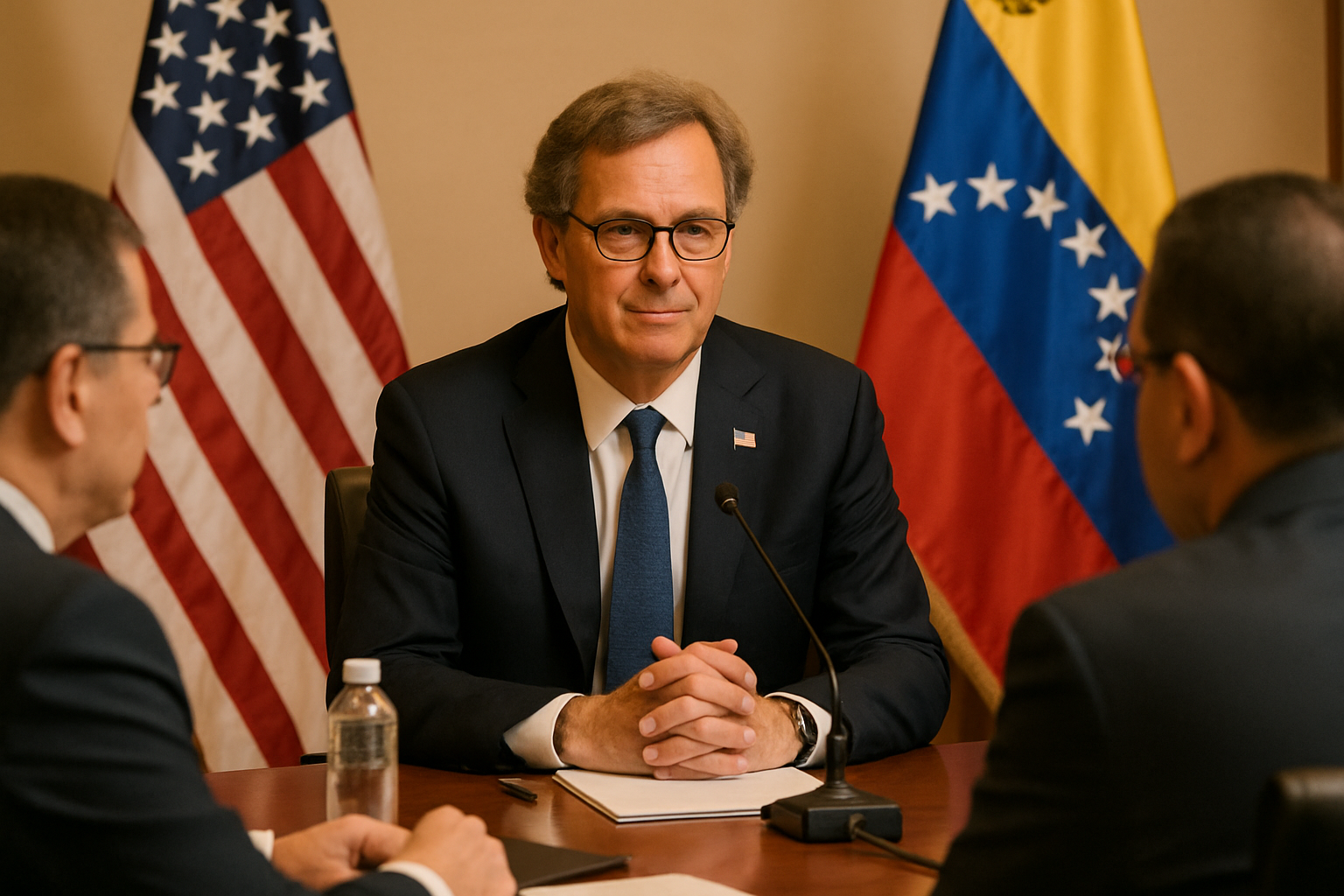
US Energy Secretary Chris Wright's historic visit to Venezuela this week marks the most significant diplomatic breakthrough in US-Venezuelan relations since 2019, with the Trump administration's top energy official declaring that the oil embargo imposed during Trump's first presidency has "essentially ended" and predicting a "dramatic increase" in Venezuelan oil output.
Wright, meeting with interim Venezuelan leader Delcy Rodríguez in Caracas, became the highest-ranking US official to visit the country since forces ousted Nicolás Maduro in January 2026. The visit represents a fundamental pivot in the Trump administration's approach to Venezuela, combining military pressure with unprecedented diplomatic engagement as part of what analysts describe as the "Corolario Trump" – a 21st-century update to the Monroe Doctrine.
"If Americans and Venezuelans work together, this year we can increase oil, natural gas and electricity production tremendously," Wright declared, without specifying exact figures. "But most importantly, above all this, is increasing employment opportunities, wages and quality of life for all Venezuelans in the country, and by doing so, the United States, the Western Hemisphere and our future partnership will benefit."
Historic Diplomatic Reset After Years of Maximum Pressure
Wright's pledge to "liberate the Venezuelan people and the economy" comes just weeks after the most intensive period of US pressure on the Caribbean nation. The transformation is remarkable: from complete economic isolation under the previous Venezuelan government to active partnership with the interim administration led by Acting President Delcy Rodríguez following Maduro's removal.
The visit follows a series of high-level diplomatic contacts, including meetings between Rodríguez and US Chargé d'Affaires Laura Dogu at the Miraflores Presidential Palace – the highest-level US-Venezuelan diplomatic contact since relations were severed in 2019. These discussions have centered on Secretary of State Marco Rubio's ambitious three-phase reconstruction plan: stabilization, economic recovery, and democratic transition.
"We believe we will witness an absolutely dramatic turn in the trajectory of this nation," Wright stated, signaling the Trump administration's confidence in Venezuela's potential for rapid transformation under US-friendly leadership.
Energy Cooperation as Geopolitical Weapon
The timing and scope of Wright's visit reflect broader strategic objectives that extend far beyond bilateral energy cooperation. According to comprehensive analysis from the Trump administration's Caribbean strategy, energy policy has become central to hemispheric dominance, combining direct military pressure with economic coercion to achieve strategic objectives.
Venezuela's oil exports have already surged 60% from 498,000 to 800,000 barrels daily since January 2026, with the United States displacing China as Venezuela's top oil customer. Chevron has more than doubled its Venezuelan shipments, and the US has released 40 million barrels from storage as part of the embargo reversal.
The transformation represents more than economic opportunity. As intelligence sources note, the approach demonstrates "systematic effort to counter Chinese influence through bilateral trade agreements, energy partnerships, and security cooperation frameworks." Venezuela's strategic location and vast oil reserves make it valuable for controlling trade routes, military positioning, and economic influence projection throughout the Western Hemisphere.
Congressional Democrats Demand Transparency
The dramatic shift has not gone unnoticed in Washington. Congressional Democrats have introduced legislation requiring the Trump administration to be transparent about Venezuelan oil sales, reflecting concerns about the rapid reversal of previous sanctions policies.
The legislative effort highlights domestic political tensions surrounding the administration's Venezuela approach. While Republicans generally support the reset as strategic victory against Chinese influence, Democrats question both the methods used to achieve the transition and the sustainability of rapid policy reversals.
Regional and International Implications
Wright's visit occurs within a broader context of Caribbean militarization and diplomatic engagement. The Trump administration has deployed the world's largest aircraft carrier to Venezuelan waters while simultaneously conducting naval operations and establishing unprecedented Caribbean military presence.
International media coverage has been extensive. France 24 characterized Wright as pledging to "make the Americas great again" during his Venezuela meetings, while Italian media described the visit as representing a "historic turning point in relations with Washington." Russian sources noted Venezuelan President Rodríguez's conviction that "issues between Venezuela and the United States can be resolved diplomatically."
The approach represents what Bolivian analysts term "crude expression of American hegemonic crisis and Western order transformation," using the Caribbean as a "laboratory testing whether 21st-century American power can be successfully reconfigured for multipolar competition."
Challenges Ahead: Infrastructure and Implementation
Despite the diplomatic breakthrough, significant challenges remain for Venezuelan energy sector recovery. Oil production, while increasing, remains at only 700,000 barrels daily compared to the historical peak of 3 million barrels. The country faces continued infrastructure decay, hyperinflation, power outages, and fuel shortages that will require sustained international investment and technical assistance.
The success of Wright's energy cooperation pledge depends heavily on massive supply chain restructuring, energy infrastructure modifications, and sustained political will across electoral cycles. Previous Venezuelan oil industry recovery efforts have faced technical, financial, and political obstacles that extend beyond diplomatic agreements.
Strategic Assessment: Template or Anomaly?
Wright's Venezuela visit represents the most significant test of the Trump administration's bilateral energy diplomacy approach. The combination of military pressure, economic coercion, and selective engagement creates a template potentially applicable to other strategic regions where the US seeks to counter Chinese influence and reassert hemispheric dominance.
Success in Venezuela could provide a model for similar approaches in other regions, while failure might undermine the credibility of economic coercion as a diplomatic tool. The stakes extend beyond bilateral relations to broader questions of 21st-century power projection and international order adaptation.
As Venezuelan authorities work to implement the energy cooperation framework, the international community watches closely for signals about the sustainability of rapid diplomatic reversals and the effectiveness of military pressure combined with economic incentives in achieving strategic objectives.
The Wright visit ultimately represents a critical moment in US-Venezuelan relations and broader Caribbean geopolitics, with implications that will likely influence American foreign policy approaches well beyond the current administration's tenure.