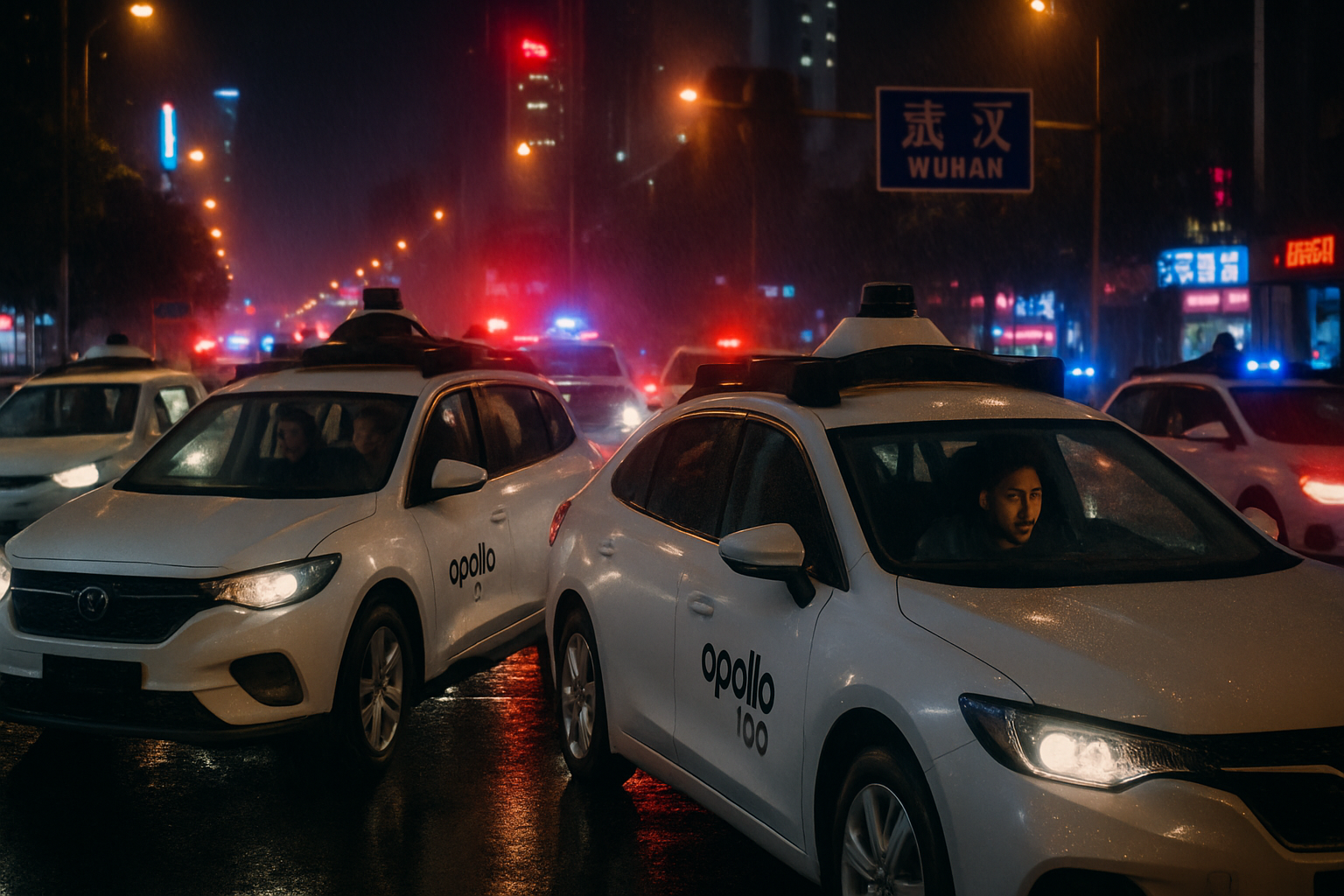
A catastrophic system malfunction brought approximately 100 Apollo Go robotaxis to a standstill across Wuhan, China on Tuesday evening, stranding passengers and exposing critical vulnerabilities in the world's rapidly expanding autonomous vehicle infrastructure.
Wuhan police received numerous reports of Apollo Go driverless vehicles suddenly stopping in the middle of roads throughout central China's transportation hub, unable to resume operation despite passenger attempts to restart the systems. The widespread malfunction affected multiple vehicles operated by Baidu's autonomous taxi service, creating traffic disruptions and sparking panic among trapped passengers who found themselves unable to exit or control the immobilized vehicles.
System Malfunction Details
According to official police statements, a "system defect" was identified as the primary cause of the mass robotaxi failure. The malfunction appears to have been centralized, affecting the fleet's core operational systems rather than individual vehicle components. Preliminary investigations suggest the cause was a system-wide technical failure, though specific details about the nature of the malfunction have not been disclosed by authorities or Baidu representatives.
The incident represents one of the largest documented failures of autonomous vehicle systems deployed at commercial scale, highlighting the risks associated with centralized control systems managing large fleets of driverless vehicles. When the central system experienced problems, it cascaded across the entire network of active robotaxis simultaneously.
Passenger Experience and Emergency Response
Passengers trapped in the immobilized vehicles described scenes of confusion and growing panic as the Apollo Go robotaxis came to sudden stops with no explanation or ability to resume service. Many passengers attempted to contact customer service through the app interface, while others sought help from passing motorists and pedestrians.
Emergency services and Wuhan traffic police responded to multiple locations across the city where stranded robotaxis were blocking traffic flow. The incidents required coordinated response efforts to safely evacuate passengers and remove the disabled vehicles from active roadways, highlighting the complexity of managing autonomous vehicle emergencies at scale.
"This incident demonstrates the critical importance of robust failsafe systems and emergency protocols when deploying autonomous vehicle technology at commercial scale."
— Transportation Safety Expert
China's Robotaxi Industry Context
The Wuhan incident occurs amid China's aggressive expansion of autonomous vehicle services, with robotaxi operations experiencing unprecedented growth across major Chinese cities. Baidu's Apollo Go service has been at the forefront of this expansion, operating thousands of autonomous vehicles in multiple metropolitan areas including Beijing, Shanghai, Guangzhou, and Wuhan.
China's robotaxi industry has been developing rapidly with significant government support and less regulatory restriction compared to Western markets. The country's approach has prioritized rapid deployment and technological advancement, with companies like Baidu, AutoX, and Pony.ai racing to establish commercial viability in the autonomous transportation sector.
The Chinese autonomous vehicle market has been characterized by aggressive scaling, with operators seeking to demonstrate commercial feasibility through high-volume operations. This approach has enabled faster technology iteration and real-world testing but has also exposed potential systemic risks when centralized systems experience failures.
Technical Infrastructure Vulnerabilities
The mass failure highlights critical vulnerabilities in centralized autonomous vehicle management systems. Unlike traditional vehicles where individual mechanical failures affect single cars, autonomous vehicle fleets often rely on centralized computing infrastructure, connectivity networks, and shared software systems that can create single points of failure affecting entire fleets simultaneously.
Industry experts note that as autonomous vehicle deployments scale, the importance of redundant systems, fail-safe protocols, and distributed architecture becomes increasingly critical. The Wuhan incident demonstrates how software or network failures can cascade across large numbers of vehicles, potentially creating widespread transportation disruption.
The incident also raises questions about emergency protocols and manual override capabilities in current generation robotaxis. Passengers' inability to take control or safely exit the vehicles during the malfunction suggests potential gaps in safety system design for emergency situations.
Regulatory and Safety Implications
The Wuhan robotaxi failure is likely to prompt closer regulatory scrutiny of autonomous vehicle safety systems and emergency protocols in China and internationally. Transportation authorities worldwide are monitoring the incident as they develop frameworks for autonomous vehicle oversight and safety requirements.
The incident comes as China prepares to implement new automotive safety regulations, including the January 2027 requirement for mechanical door releases in all vehicles, prioritizing functional safety over design aesthetics. This regulatory trend toward enhanced safety requirements reflects growing awareness of the unique risks associated with software-controlled transportation systems.
International observers note that the Wuhan incident provides valuable data about the challenges of scaling autonomous vehicle operations, particularly regarding system reliability, emergency response protocols, and the need for robust backup systems when primary operations fail.
Industry Response and Future Development
The Apollo Go system failure represents a significant test case for the autonomous vehicle industry's approach to safety, reliability, and emergency management. As companies worldwide prepare to scale their robotaxi operations, the lessons learned from this incident will likely influence system architecture, safety protocols, and regulatory requirements.
The incident underscores the importance of developing autonomous vehicle systems with multiple layers of redundancy, robust emergency protocols, and fail-safe mechanisms that can ensure passenger safety even when primary systems experience failures. Future autonomous vehicle deployments will need to balance the benefits of centralized management with the risks of system-wide vulnerabilities.
As the autonomous vehicle industry continues its rapid development, incidents like the Wuhan robotaxi failure provide crucial real-world data about the challenges of deploying self-driving technology at commercial scale, informing both technological development and regulatory oversight approaches worldwide.