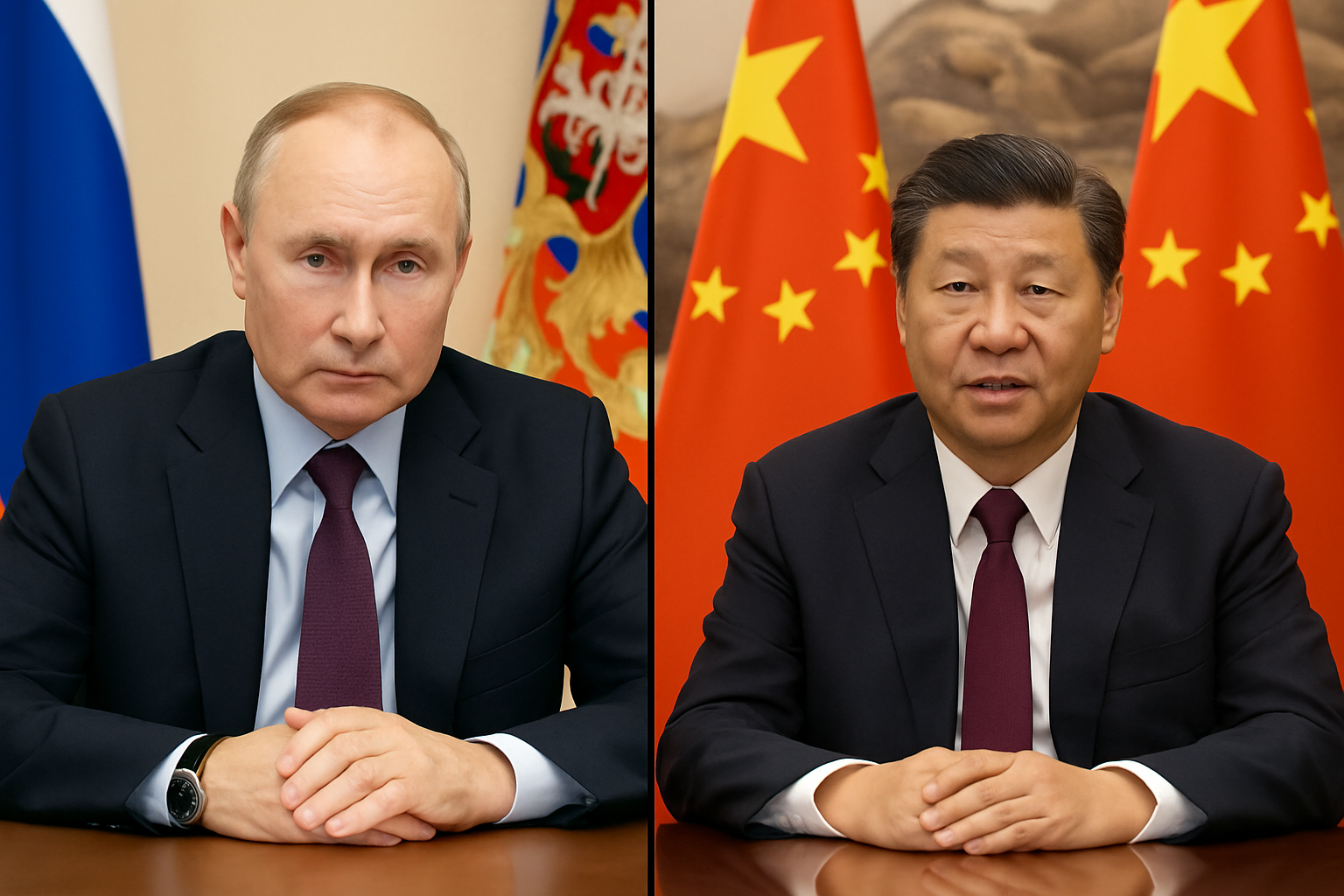
Chinese President Xi Jinping and Russian President Vladimir Putin conducted a pivotal video conference Wednesday, February 4, 2026, reinforcing their strategic partnership as a "stabilizing force" in global affairs while positioning their alliance as a counterweight to Western influence amid ongoing geopolitical tensions.
The high-level diplomatic exchange occurred against the backdrop of intensifying global tensions, with both leaders emphasizing their commitment to deepening cooperation across political, economic, and security spheres. Putin characterized the bilateral relationship as an "important stabilizing factor" during what he described as a period of "growing turbulence" worldwide.
Strategic Partnership Deepens
According to multiple international sources, Putin told his Chinese counterpart that Moscow and Beijing's "foreign policy alliance" remains crucial for global stability. The Russian leader specifically highlighted cooperation in the energy sector, nuclear power, and high-technology fields as cornerstone elements of the expanding partnership.
Xi Jinping responded by declaring that relations between the two nations have entered a "new phase of development," emphasizing China's determination to work with Russia in "defending international justice." The Chinese president described the bilateral relationship as being "on the right track" and stressed the need for a "grand plan" to further strengthen ties.
"Relations between our two countries enter in a new phase of development. We are determined with Russia to defend international justice."
— Xi Jinping, President of China
Economic Cooperation at the Forefront
The video call comes just days after senior officials from both countries agreed that bilateral relations could "break new ground" in 2026, with particular emphasis on ramping up economic cooperation. Energy cooperation featured prominently in discussions, reflecting Russia's position as a major energy supplier and China's growing energy demands.
Putin specifically mentioned "strategic cooperation with China in the energy field," highlighting the deepening economic interdependence between the two nations. This cooperation has become increasingly important for Russia as it faces continued Western sanctions related to its actions in Ukraine.
Geopolitical Timing and Context
The timing of the Xi-Putin video conference is particularly significant, occurring amid several critical global developments. The call took place as the United States claims to be moving closer to achieving a peace agreement to end the conflict in Ukraine, with trilateral peace talks between Ukraine, Russia, and the US scheduled for Abu Dhabi.
The diplomatic exchange also follows Russia's recent major attack on Ukrainian energy infrastructure, which broke an informal agreement to avoid targeting energy facilities. This escalation has complicated ongoing peace negotiations and demonstrated Russia's continued willingness to use humanitarian pressure as a negotiating tactic.
Alliance Against Western Influence
The Putin-Xi dialogue reflects the broader strategic alignment between Moscow and Beijing as both nations seek to challenge what they perceive as Western hegemony. Since Russia's 2022 Ukraine offensive, the two countries have presented an increasingly united front against Western policies and sanctions.
Multiple sources confirm that both leaders view their partnership as essential for creating a multipolar world order that reduces Western, particularly American, influence in global affairs. This positioning comes at a time when China is simultaneously balancing engagement with Western nations while maintaining strong ties with Moscow.
Military and Security Dimensions
While specific military cooperation details were not disclosed in the public statements from the video call, the emphasis on "security ties" suggests continued coordination between the two nations' defense establishments. This cooperation has included joint military exercises and technology sharing agreements in recent years.
The strengthening of bilateral security cooperation occurs as China continues its military modernization efforts and Russia seeks to maintain its strategic position despite ongoing conflicts and international isolation.
Regional and Global Implications
The reinforced China-Russia partnership has significant implications for regional stability and global power dynamics. European officials have expressed concern about the deepening alliance, particularly as it relates to ongoing conflicts and territorial disputes.
The partnership also impacts other regional powers, with India maintaining its traditional non-aligned stance while engaging economically with both nations. Recent reports indicate that India-China trade reached a record $155 billion in 2025, demonstrating the complex web of relationships in the region.
Energy and Economic Integration
Energy cooperation remains a cornerstone of the China-Russia relationship, with Beijing serving as a crucial market for Russian energy exports amid Western sanctions. The partnership has helped Russia maintain economic stability while providing China with reliable energy supplies for its growing economy.
Beyond energy, the two nations are expanding cooperation in nuclear power, high-technology sectors, and infrastructure development. These partnerships are designed to reduce dependence on Western technology and create alternative supply chains.
Diplomatic Messaging
The public messaging from both leaders during the video call was carefully crafted to send signals to multiple audiences. The emphasis on "stability" and "international justice" is directed at developing nations and others who may view the Western-led international order as problematic.
The call also serves as a demonstration of unity at a time when both nations face various international pressures and challenges. For Putin, the partnership with Xi provides legitimacy and economic support amid isolation from many Western nations.
Future Trajectory
The video conference sets the stage for continued deepening of China-Russia cooperation throughout 2026. Both leaders indicated their commitment to expanding the partnership across multiple sectors, suggesting that bilateral relations will continue to strengthen regardless of external pressures.
The strategic partnership between Beijing and Moscow is likely to remain a defining feature of international relations, influencing everything from global energy markets to regional security arrangements and international diplomatic initiatives.
As global tensions continue to evolve, the Xi-Putin alliance represents a significant counterbalance to Western influence, with implications that extend far beyond the bilateral relationship to shape the broader international order in the years ahead.