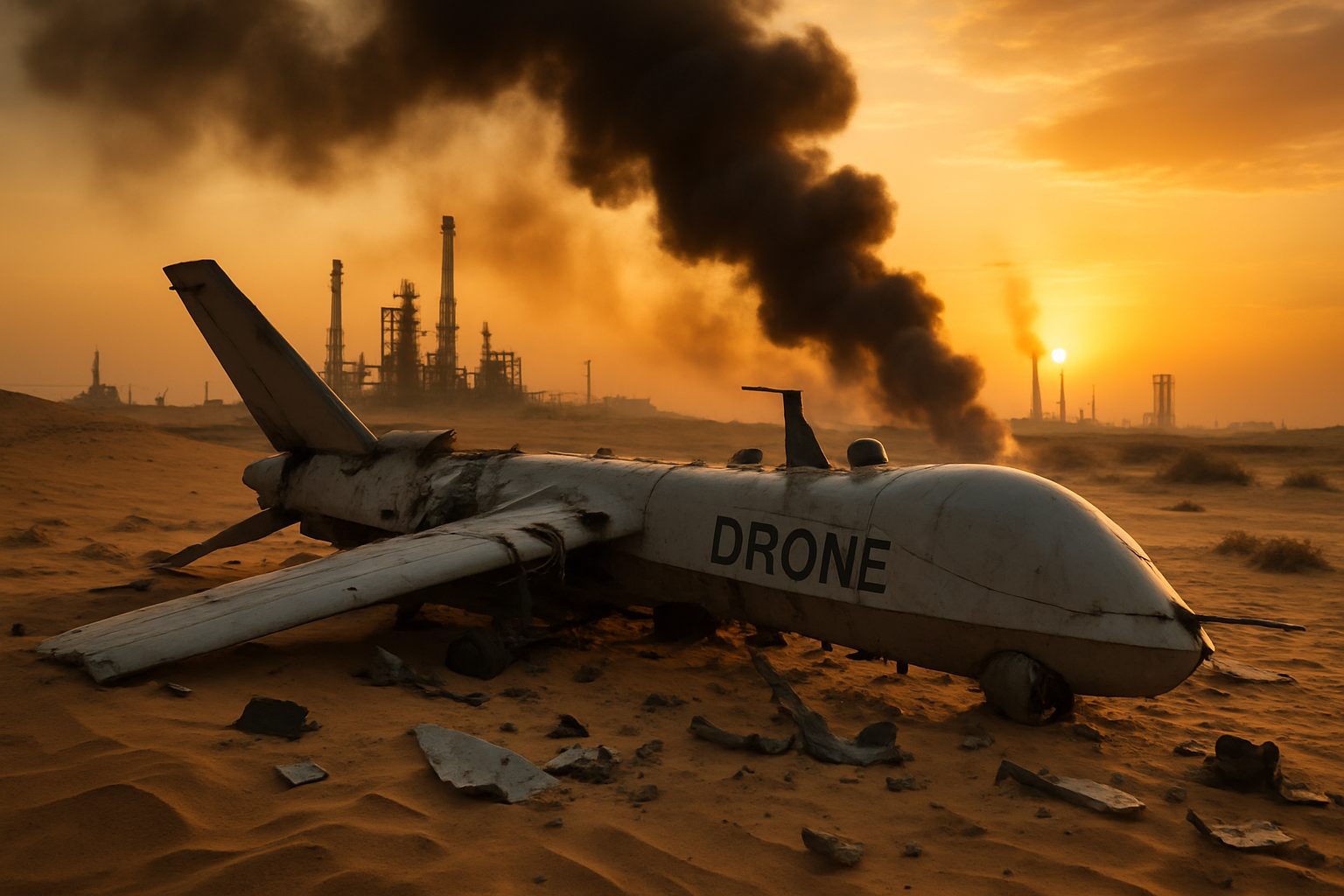
Yemeni forces shot down an advanced American drone in Abyan governorate, southern Yemen, on March 2, 2026, in an incident occurring against the backdrop of unprecedented Middle East tensions following the collapse of US-Iran nuclear negotiations and subsequent military confrontations.
Multiple field sources confirmed that wreckage found in the Masab area of Khabar al-Maraqisha district belongs to a US military drone, according to reports from the Yemen Press Agency. The incident comes amid peak military escalation throughout the region, with the area shrouded in operational secrecy.
Broader Regional Crisis Context
The drone downing occurs within the context of the most dangerous Middle East crisis since the Cold War's end, triggered by the complete breakdown of US-Iran nuclear diplomacy despite achieving significant framework progress in Geneva talks. The collapse of these negotiations led to "Operation Epic Fury" - coordinated US-Israeli strikes against Iranian facilities - followed by massive Iranian retaliation dubbed "Operation True Promise 4."
Iran's retaliatory strikes targeted multiple Gulf countries including Kuwait, UAE, Bahrain, and Qatar, with casualties reported across the region. The UAE confirmed one civilian fatality in Abu Dhabi from missile debris, while Kuwait Airport was struck by Iranian drones, causing employee injuries and flight suspensions.
"The situation represents the most significant regional military escalation since June 2025's Iran-Israel conflict,"
— Regional Security Analyst
Saudi Aramco Infrastructure Targeted
Simultaneously, Iran revealed what it described as Israeli strikes targeting Saudi Arabia's Aramco oil facilities. According to Iranian military sources cited by the Yemen Press Agency, the attack occurred early Monday and allegedly targeted facilities belonging to Saudi Aramco. Iranian sources characterized the incident as a "disinformation operation."
The reported targeting of Saudi Arabia's critical energy infrastructure underscores the expanding scope of regional tensions beyond the primary US-Iran confrontation. Saudi Arabia has been part of an unprecedented regional coalition - including the UAE, Qatar, and Egypt - that had backed diplomatic efforts to resolve the nuclear crisis peacefully.
Military Escalation Across Multiple Fronts
The Yemen drone incident represents part of broader regional military activities following the diplomatic breakdown. The crisis has involved:
- Unprecedented dual-carrier US deployment with USS Gerald R. Ford and Abraham Lincoln
- Closure of airspace by Iran, Iraq, Israel, UAE, and Qatar to civilian traffic
- Over 18,000 flight cancellations worldwide affecting major carriers
- Oil price surges due to threats to the Strait of Hormuz (40% of global oil transit)
The involvement of Yemeni forces in downing the US drone suggests the potential expansion of the conflict to include Iran's regional allies and proxy forces, a development that had been a central concern during the failed nuclear negotiations.
Nuclear Diplomacy Collapse Background
The current escalation follows the complete breakdown of months of intensive US-Iran nuclear negotiations, despite achieving what Iranian Foreign Minister Abbas Araghchi called "broad agreement on guiding principles" - the most significant progress since the 2018 JCPOA collapse.
The fundamental obstacle remained unchanged: Iran excluded ballistic missiles and regional proxy activities as "red lines" from nuclear-only talks, while the US insisted on comprehensive agreements including missiles, armed groups, and human rights issues.
Iran has maintained uranium enrichment at 60% purity - approaching the 90% weapons-grade threshold - with former IAEA inspector Dr. Yusri Abu Shadi confirming that Iran possesses over 400kg of enriched uranium, making nuclear weapons capability "easily achievable."
Regional Coalition Under Strain
The unprecedented regional coalition of Saudi Arabia, UAE, Qatar, and Egypt that had supported diplomatic processes is now severely tested by direct Iranian attacks on member territories. Egypt condemned Iran's targeting of "sisterly Arab countries," warning of potential "comprehensive chaos."
The Persian Gulf's role in handling 40% of global oil transit has created massive energy security stakes, with regional powers having invested significantly in conflict prevention. However, the direct attacks on Gulf territories challenge this consensus approach.
International Response and Implications
The crisis occurs against the backdrop of broader nuclear governance challenges, including the expiration of the New START treaty on February 5, 2026 - the first time in over 50 years without US-Russia nuclear constraints. UN Secretary-General António Guterres has warned that nuclear risks are at their "highest in decades."
Multiple countries have issued emergency travel warnings and conducted embassy evacuations, including Sweden and Serbia ordering immediate citizen departures from Iran citing "extremely uncertain" security situations.
Energy Market and Global Implications
Oil prices have risen immediately on concerns over the Strait of Hormuz, through which 40% of global oil transits. The aviation crisis has severely disrupted the Middle East as a critical Europe-Asia connecting hub, with major carriers suspending operations and affecting hundreds of thousands of passengers worldwide.
The template-setting nature of this crisis for 21st-century conflict resolution has global implications extending far beyond the Middle East, affecting international approaches to nuclear crisis management, territorial sovereignty enforcement, and diplomatic credibility in a multipolar world order.
Strategic Stakes and Future Implications
The downing of the US drone by Yemeni forces, combined with reported strikes on Saudi facilities, represents a dangerous expansion of the regional crisis beyond its initial US-Iran nuclear framework. The involvement of proxy forces and attacks on Gulf energy infrastructure threaten to destabilize the broader Middle East security architecture.
With Iran declaring that "no red lines remain" following the military confrontations, the potential for broader conflict escalation remains high. The crisis tests not only regional stability mechanisms but also global governance frameworks for managing nuclear proliferation and territorial disputes in the modern era.
The coming days will be critical in determining whether diplomatic channels can be restored or if the region faces a prolonged period of military confrontation that could reshape Middle East geopolitics for decades to come.