A South Korean court sentenced former President Yoon Suk Yeol to life in prison on Thursday, February 19, 2026, after finding him guilty of masterminding an insurrection linked to his December 2024 attempt to impose martial law that plunged the nation into its most serious constitutional crisis since democratization.
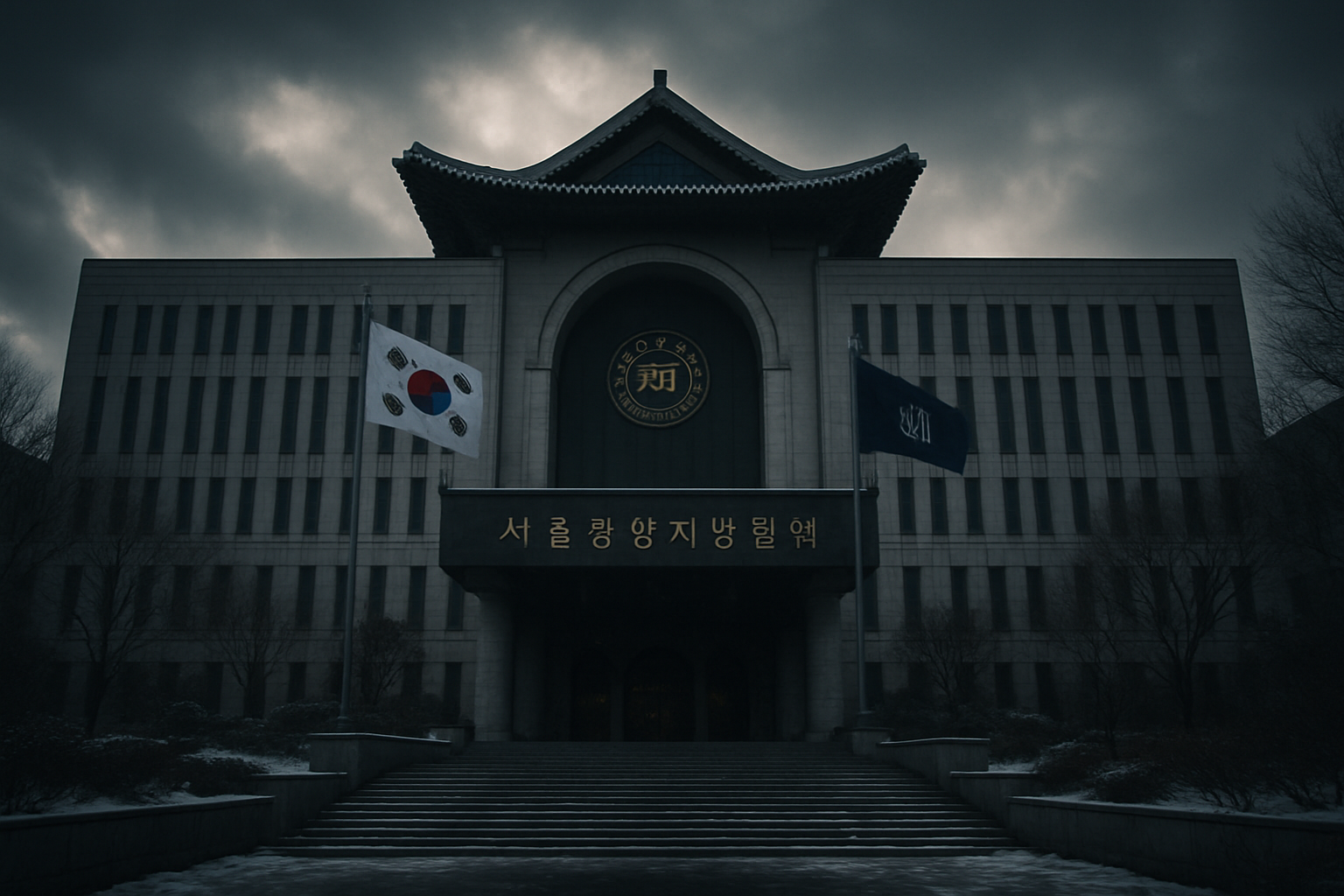
The Seoul Central District Court delivered the historic verdict after prosecutors had sought the death penalty for the 65-year-old conservative leader, who became the first sitting South Korean president to be prosecuted for attempting to destroy the constitutional order he had sworn to defend.
"It is the court's judgment that sending armed troops to parliament and using equipment to try to make arrests all constitute acts of insurrection," Presiding Judge Jee Kui-youn told a packed courtroom, speaking for the three-judge panel.
The Martial Law Crisis That Shook Democracy
Yoon fell from power after his ill-advised attempt to overcome an opposition-controlled legislature by declaring martial law and sending troops to surround the National Assembly on December 3, 2024. The dramatic bid to seize control lasted only hours before lawmakers overturned the declaration, but it triggered a national political crisis that tested South Korea's democratic resilience.
Judge Jee found that Yoon conspired with his then-defense minister Kim Yong-hyun to subvert the constitutional order by deploying troops to parliament, intending to paralyze its functions and establish unchecked power for a "considerable" time. The court determined this constituted the crime of leading an insurrection against the state.
The prosecution argued that Yoon's actions posed a fundamental threat to South Korea's democracy, seeking the ultimate penalty under the law. However, the court opted for life imprisonment, avoiding the death penalty that hasn't been carried out in South Korea since 1997.
Co-Defendants Also Sentenced
The court also handed down significant sentences to Yoon's key collaborators in the martial law plot. Former Defense Minister Kim Yong-hyun, who was instrumental in implementing the decree, received 30 years in prison. Former intelligence chief Roh Sang-won was sentenced to 18 years, while Seoul Police Chief Kim Bong-sik received 10 years and National Assembly police guard chief Mok Hyun-tae was given 3 years.
These sentences represent a comprehensive accountability effort targeting the entire chain of command involved in the attempted constitutional overthrow, demonstrating the court's determination to establish clear consequences for attacks on democratic institutions.
A Deeply Divided Nation
Yoon's martial law order has left South Korea more polarized than ever, and those deep divisions were on full display during the sentencing proceedings. Huge crowds of Yoon's supporters gathered outside the court hours before the hearing, holding banners reading "Yoon, again" and maintaining their belief in his innocence.
Many of these supporters, echoing rhetoric reminiscent of "Make America Great Again" movements, continue to view Yoon as a victim of political persecution rather than a constitutional violator. The polarization reflects broader concerns about the health of South Korean democracy and the challenge of healing political divisions.
National Assembly Speaker Woo Won-shik urged Yoon to apologize to the nation following the verdict, while his defense team indicated they were considering an appeal, claiming the proceedings reflected prejudgment rather than fair judicial review.
International Significance and Precedent
The life sentence has garnered significant international attention as a test case for democratic accountability when presidents attack their own institutions. Global media coverage has emphasized the unprecedented nature of a prosecutor-turned-president being convicted of attempting to destroy the very constitutional order he once served to protect.
The case demonstrates the resilience of South Korea's democratic institutions in the face of internal authoritarian threats, setting an important international precedent for the enforcement of rule of law even against the highest office holders. It reinforces that no one, regardless of position, is above the law in a functioning democracy.
The Prosecutor Who Became President
Yoon's conviction carries particular irony given his background as a former prosecutor who built his reputation fighting corruption and defending the rule of law. His transformation from a law enforcement official to a convicted insurrectionist represents one of the most dramatic falls from grace in modern South Korean politics.
The conservative leader, who took office in 2022 promising to strengthen democratic institutions and the rule of law, instead attempted to undermine the very foundations of South Korean democracy when faced with political opposition.
"The declaration of martial law resulted in enormous social costs and the accused has shown no remorse for his actions."
— Judge Jee Kui-youn, Seoul Central District Court
Historical Context and Democratic Resilience
Thursday's verdict represents the most serious constitutional crisis South Korea has faced since its transition to democracy in the 1980s. The successful prosecution of a sitting president for attempting to overthrow constitutional governance demonstrates the maturation and strength of South Korean democratic institutions.
The case also highlights South Korea's strategic importance in Northeast Asia, showcasing the country's democratic institutional maturity amid regional tensions involving China and North Korea. The peaceful resolution of this constitutional crisis through legal processes rather than political upheaval reinforces South Korea's position as a stable democratic partner.
Implications for South Korean Politics
The life sentence effectively ends Yoon's political career and sends a powerful message about the consequences of attacking democratic governance. It represents both a moment of democratic reckoning and an opportunity for renewal, as South Korea grapples with healing the deep political divisions exposed by the crisis.
The verdict also prompts calls for broader institutional reforms to prevent future attempts at democratic subversion, ensuring that the constitutional safeguards that ultimately protected South Korean democracy in December 2024 remain robust against future threats.
As South Korea moves forward from this unprecedented constitutional crisis, the life sentence serves as both a cautionary tale about the fragility of democratic institutions and a testament to their ultimate resilience when properly defended by an independent judiciary and engaged citizenry.
Looking Forward
While Yoon's defense team prepares a potential appeal, the life sentence stands as a definitive statement that attempts to destroy constitutional democracy will face the full force of the law. The case will likely be studied internationally as a model for how democratic societies can respond to internal threats while maintaining their commitment to due process and the rule of law.
For South Korea, the challenge now lies in healing the political divisions that made such a crisis possible while strengthening the democratic institutions that ultimately preserved the country's constitutional order. The successful prosecution of this case demonstrates that South Korean democracy, while tested, has emerged stronger and more resilient.