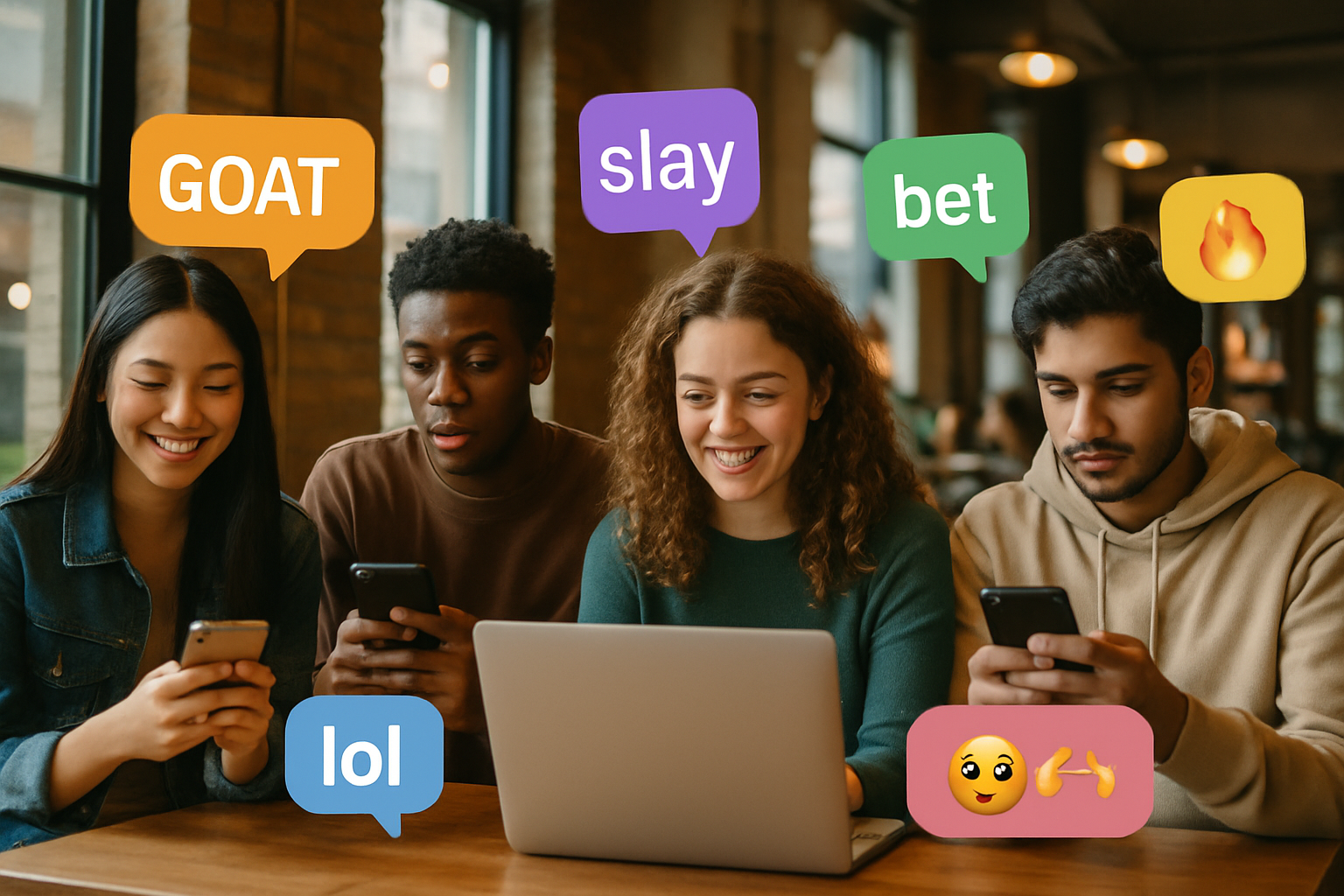
From "Six-Seven" becoming mainstream slang to the rise of completely new communication patterns, Generation Z and Alpha are fundamentally transforming how we speak, write, and express ourselves in the digital age.
The Austrian publication Der Standard recently highlighted this linguistic revolution with the observation that it's "crazy how Six-Seven has established itself as a term among young people." This phenomenon represents just the tip of the iceberg in what researchers are calling the most significant transformation of youth language since the advent of writing itself.
The New Digital Vernacular
Today's youth culture operates in a linguistic ecosystem that would be virtually unrecognizable to previous generations. Terms like "goonen," "schere," and "ragebait" have emerged from internet culture to become part of everyday conversation. This isn't simply about new slang – it's about entirely new ways of constructing meaning and identity through language.
The speed at which these linguistic innovations spread has accelerated dramatically. What once took years to move from niche communities to mainstream usage now happens in weeks or even days through social media platforms, particularly TikTok, Instagram, and Discord. This acceleration is creating what linguists term "micro-generational" language gaps, where 16-year-olds and 19-year-olds may use significantly different terminology.
Beyond Slang: Cultural Expression in Digital Spaces
The transformation goes far deeper than vocabulary changes. Young people are developing entirely new grammatical structures, communication rhythms, and forms of emotional expression. The use of lowercase letters for emphasis, strategic misspelling for aesthetic effect, and the integration of emojis as syntactical elements represent fundamental shifts in written communication.
Research from multiple countries shows that 96% of children aged 10-15 use social media regularly, with this constant digital immersion creating what psychologists describe as "environmental language learning" – where young people absorb linguistic patterns from their digital surroundings as naturally as they once learned from family conversations.

The Global Impact of Digital Nativity
What makes this linguistic revolution particularly significant is its global reach. Unlike previous youth culture movements that spread gradually from urban centers, digital platforms create simultaneous worldwide adoption of new terms and expressions. A phrase coined in Austria can appear in teenage conversations across six continents within hours.
This has created what researchers term "glocal" language patterns – globally understood terms that are locally adapted. The same core digital vocabulary appears worldwide, but with regional modifications that reflect local cultural values and linguistic structures.
The "Six-Seven" Phenomenon
The Austrian example of "Six-Seven" becoming mainstream illustrates this pattern perfectly. What began as internet slang has crossed into spoken language, print media, and even academic discussions. This represents a complete reversal of traditional linguistic flow, where formal language typically influenced informal speech rather than the other way around.
"The speed and scale of linguistic change we're witnessing is unprecedented in human history. Young people aren't just using new words – they're creating new rules for how language itself works."
— Dr. Sarah Chen, Digital Linguistics Institute
Mental Health and Identity Formation
This linguistic transformation isn't occurring in isolation – it's intimately connected to broader changes in how young people form identity and navigate mental health challenges. Research from multiple countries indicates that language creation serves as a form of community building and psychological expression for digital natives.
However, concerns are mounting about the potential negative impacts. Studies show that 70% of young people report exposure to harmful content through social media, while 50% experience cyberbullying. The same platforms that enable creative linguistic expression also create new forms of social pressure and comparison.
Mental health professionals note a "wellness paradox" where the constant pressure to maintain perfect online personas – including staying current with rapidly evolving slang – creates psychological exhaustion rather than genuine connection.
Educational and Social Implications
Educational systems worldwide are grappling with how to respond to these linguistic changes. Some countries are implementing comprehensive digital literacy programs, while others are struggling to keep pace with the rapid evolution of youth communication patterns.
Finland's approach of integrating digital wellness into curricula has shown promising results, while countries implementing blanket technology bans report increased classroom discipline problems without corresponding academic improvements.
The Workplace Challenge
As Generation Z enters the workforce in larger numbers, employers are discovering significant communication gaps between digital natives and older generations. What young employees consider normal communication patterns – heavy use of abbreviated language, emoji integration, and informal tone – can create misunderstandings in professional settings.
Cultural Preservation vs. Innovation
One of the most significant challenges facing youth language evolution is balancing innovation with cultural preservation. While digital platforms enable unprecedented linguistic creativity, they also risk overwhelming traditional cultural expressions and regional language variations.
Countries like Malaysia and Singapore have successfully integrated technological innovation with cultural heritage preservation, demonstrating that digital communication evolution doesn't necessarily require abandoning traditional linguistic values.
The International Response
Governments and international organizations are beginning to recognize the significance of these linguistic changes. Spain has implemented criminal liability frameworks for platforms that fail to protect young users, while European nations are coordinating age verification systems to prevent harmful algorithmic exposure.
However, the global nature of digital communication makes regulation complex. A platform blocked in one country may still influence linguistic patterns through international peer networks and content sharing.
Looking Forward: The Future of Human Communication
As we move deeper into 2026, several trends are becoming clear. Young people are not simply consumers of language – they are active creators reshaping human communication in real-time. The terms highlighted in the Austrian glossary represent just the beginning of what promises to be an ongoing transformation.
The emergence of terms like "goonen," "schere," and "ragebait" signals broader patterns: the gamification of language, the emotional intensification of communication, and the creation of in-group solidarity through shared linguistic codes.
The Role of Artificial Intelligence
Increasingly sophisticated AI systems are beginning to influence youth language patterns as well. Young people report using AI for creative writing, communication assistance, and even linguistic experimentation. This human-AI linguistic collaboration is creating hybrid communication patterns that blend human creativity with algorithmic suggestions.
Recommendations for Stakeholders
For educators, parents, and policymakers, understanding and adapting to these linguistic changes is crucial. Rather than resisting youth language evolution, successful approaches focus on building bridges between traditional communication skills and emerging digital literacies.
Key strategies include:
- Implementing comprehensive digital citizenship education
- Teaching code-switching between formal and informal communication
- Recognizing linguistic creativity as a valuable skill
- Providing safe spaces for linguistic experimentation
- Maintaining intergenerational dialogue about communication preferences
The youth language revolution of 2026 represents more than generational difference – it's a fundamental shift in how humans create meaning, build community, and express identity. Understanding these changes isn't just about keeping up with slang; it's about recognizing the emergence of new forms of human consciousness and social organization.
As young people continue to reshape language through digital platforms, society faces the challenge of supporting their creative expression while providing the guidance and protection they need to thrive. The future of human communication is being written right now, one "Six-Seven" at a time.