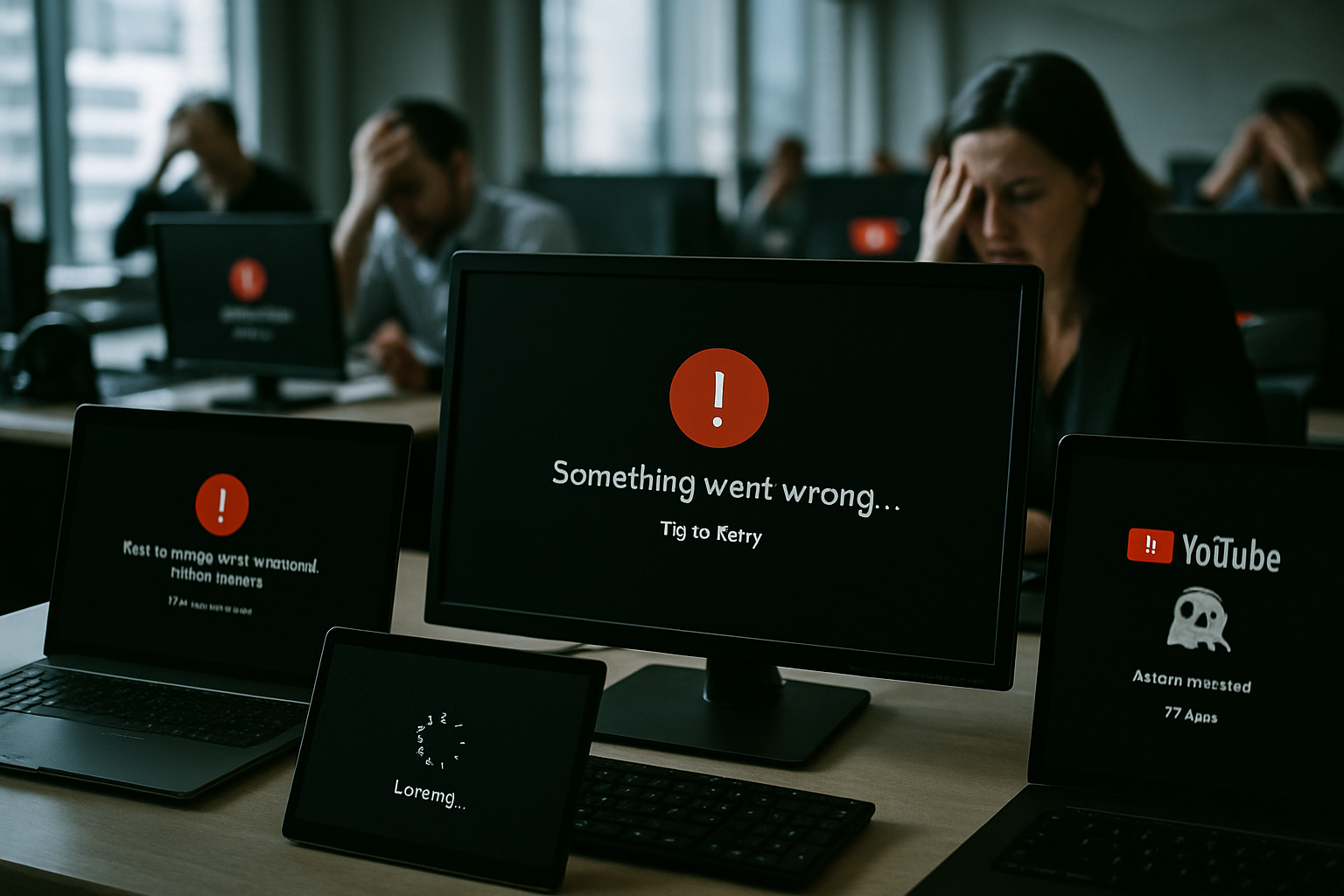
YouTube experienced a significant global service disruption on Tuesday evening, with users worldwide reporting widespread access problems as the video platform's homepage displayed "something went wrong" error messages while some individual videos remained accessible.
According to monitoring website DownDetector, more than 283,000 problem reports were registered around 5:30 PM Pacific Time, marking one of the most significant outages for the Google-owned platform in recent memory. The disruption primarily affected users in the United States and Southeast Asia regions, though reports emerged from multiple continents.
Scale and Geographic Impact
The outage demonstrated the global reach of YouTube's service disruption, with reports flooding in from diverse geographical locations. New Zealand's Radio New Zealand confirmed that "thousands of users worldwide are experiencing an outage on YouTube's website with a 'something went wrong' sign coming up on its homepage."
Singapore's Channel NewsAsia reported that YouTube was "down for users in the US, Southeast Asia," highlighting the concentrated impact in these key regions. The platform disruption also extended to South Korea, where Yonhap News Agency documented "partial service disruption" affecting local users.
In Taiwan, local media reported that many residents celebrating the Lunar New Year holiday found themselves unable to access YouTube content, with the homepage displaying blank screens instead of the usual video recommendations.
Technical Nature of the Outage
Independent journalist investigations revealed the selective nature of the service disruption. While YouTube's main homepage failed to load properly for many users, individual video URLs continued to function normally in many cases. This suggested that the outage primarily affected the platform's content discovery and recommendation systems rather than its core video streaming infrastructure.
French media reports indicated that the most frequently mentioned difficulty concerned YouTube's mobile application, suggesting that the outage may have disproportionately impacted mobile users compared to desktop browsers.
User Response and Social Media Reaction
Social media platform X (formerly Twitter) became the primary venue for users to report and discuss the YouTube outage, with numerous posts confirming the widespread nature of the service disruption. The hashtag trends reflected user frustration and attempts to determine whether the problem was localized or global.
The timing of the outage proved particularly inconvenient for users in Asia-Pacific regions, where it occurred during peak evening viewing hours. Taiwan's Liberty Times noted that the disruption coincided with the second day of Lunar New Year celebrations, when many families traditionally spend time at home watching online content.
Platform's Strategic Importance
The outage highlighted YouTube's critical role in global digital infrastructure. Recent financial reports revealed that YouTube achieved historic revenue milestones exceeding $60 billion in 2025, underscoring the platform's massive user base and economic significance.
"YouTube has become essential digital infrastructure for billions of users worldwide, making any service disruption immediately felt across multiple time zones and user communities."
— Digital Media Analyst
The platform serves not only entertainment functions but also educational, news, and business purposes, meaning outages affect diverse user categories from individual consumers to commercial content creators who depend on the platform for revenue generation.
Historical Context and Frequency
While YouTube outages occur periodically, the scale of Tuesday's disruption appeared unusually extensive based on the volume of user reports and geographic spread. The platform's complex technical infrastructure, serving billions of hours of video content daily, makes it susceptible to various technical challenges ranging from server issues to content delivery network problems.
The selective nature of this outage – where homepage functionality failed while individual videos remained accessible – suggests potential issues with YouTube's recommendation algorithms or content management systems rather than fundamental streaming infrastructure.
Recovery and Service Restoration
YouTube's technical teams worked to address the service disruption, though the company has not yet released detailed statements about the root cause or expected resolution timeline. The platform's incident response procedures typically involve identifying affected systems, implementing fixes, and gradually restoring service across different regions.
Given YouTube's global infrastructure with multiple data centers and content delivery networks, service restoration often occurs in phases, with some users regaining access before others depending on their geographic location and internet service provider routing.
Impact on Content Creators and Businesses
The outage particularly affected content creators and businesses that rely on YouTube for revenue generation through advertising, sponsorships, and direct viewer support. During service disruptions, creators lose both immediate viewing revenue and potential subscriber growth, while businesses depending on YouTube for marketing campaigns face advertising delivery interruptions.
The timing during Asian peak hours meant that creators in major markets like South Korea, Taiwan, and Southeast Asia faced disruption during their most active audience engagement periods.
Broader Digital Infrastructure Implications
Tuesday's YouTube outage reflects broader questions about digital infrastructure resilience as major platforms become increasingly central to global communications, education, and entertainment. When platforms serving billions of users experience disruptions, the cascading effects demonstrate the interconnected nature of modern digital ecosystems.
The incident occurs amid ongoing discussions about platform reliability, content moderation, and the concentration of digital services among a small number of major technology companies. Regulators and policymakers worldwide continue examining the implications of platform dependencies for both users and broader economic systems.
User Alternatives and Platform Competition
During the outage, users sought alternative platforms for video content, temporarily increasing traffic to competitors like TikTok, Instagram, and various regional video platforms. However, YouTube's massive content library and creator ecosystem make finding direct substitutes challenging for most use cases.
The disruption highlighted both YouTube's market dominance in long-form video content and the limited alternatives available for users seeking similar comprehensive video platforms with comparable content diversity and quality.