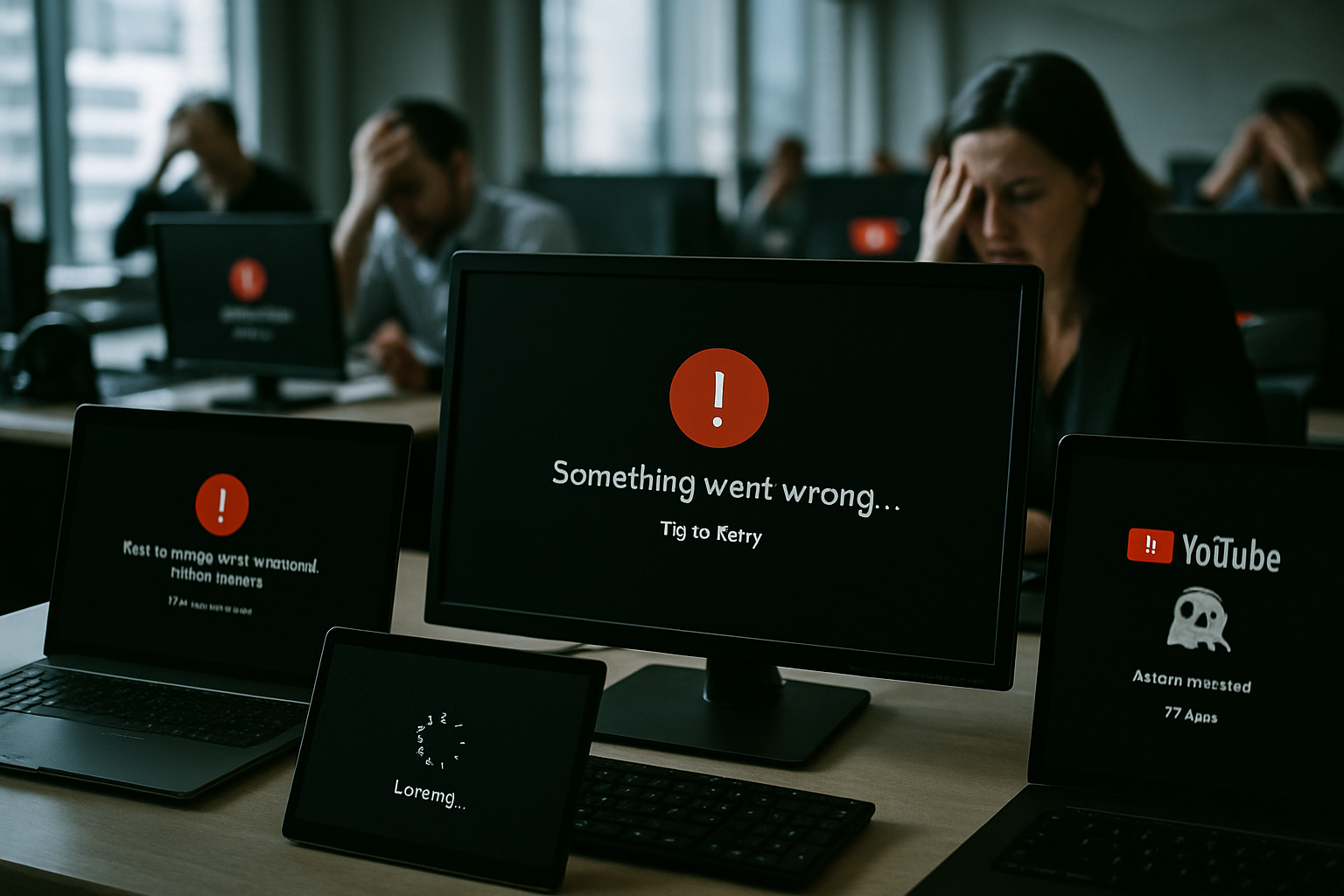
YouTube suffered a widespread global service outage on February 17-18, 2026, affecting millions of users across multiple continents before the platform successfully restored full functionality after resolving technical issues with its recommendation system.
The disruption, which began on February 17 around 7:30 PM Peruvian time, prevented videos from appearing across YouTube's various surfaces, including the homepage, mobile applications, YouTube Music, YouTube Kids, and YouTube TV. Users worldwide reported difficulties accessing content through the platform's primary interfaces.
Peak Impact and User Reports
At the height of the outage, DownDetector recorded over 320,000 user reports of YouTube issues in the United States alone, indicating the massive scale of the global disruption. The outage tracking website documented widespread problems spanning multiple continents, with particularly heavy reporting from users in Ecuador, Norway, Pakistan, Peru, Portugal, South Korea, and Thailand.
Users across different regions experienced various levels of service disruption. While individual video URLs remained accessible in many cases, the platform's core discovery and recommendation features were completely non-functional. The mobile applications appeared to be more severely affected than desktop access, creating uneven service experiences across different user interfaces.
"The issue with our recommendations system prevented videos from appearing across surfaces on YouTube (including the homepage, the YouTube app, YouTube Music and YouTube Kids). The homepage is back, but we're still working on a full fix – more coming soon!"
— TeamYouTube, Official Twitter Account
Technical Root Cause Identified
YouTube's official response identified the core problem as a malfunction within the platform's recommendation system. This critical infrastructure component is responsible for curating and displaying personalized content across all YouTube services, explaining why the outage affected multiple platform variants simultaneously.
The recommendation system disruption meant that while YouTube's streaming infrastructure remained largely intact, users could not access the curated content feeds that form the backbone of the modern YouTube experience. The homepage displayed error messages, and users found themselves unable to discover new content through the platform's algorithmic suggestions.
YouTube's engineering teams implemented a phased restoration approach, with the homepage being restored first while work continued on comprehensive system recovery. The company provided regular updates through its official social media channels, maintaining transparency throughout the incident response process.
Global Response and User Migration
During the outage, social media platform X became the primary venue for user reports, complaints, and real-time updates about service status. The incident highlighted YouTube's critical role in global digital infrastructure, with users expressing frustration at losing access to entertainment, educational content, and business-critical video resources.
The timing of the outage proved particularly disruptive in Asian markets, where it coincided with peak evening viewing hours. This geographical concentration of impact underscored the platform's importance as essential digital infrastructure serving billions of users across different time zones and cultural contexts.
Content creators who depend on the platform for revenue and audience engagement faced temporary but significant business disruption. The outage affected not only direct viewing but also the complex advertising and monetization systems that support YouTube's creator economy.
Service Restoration and Recovery
YouTube's technical teams achieved gradual service restoration across different regions and platform variants. The company's incident response demonstrated sophisticated crisis management capabilities, with systematic debugging and repair processes that minimized the duration of complete service unavailability.
"The issue with our recommendations system has been resolved, and all of our platforms (YouTube.com, the YouTube app, YouTube Music, Kids, and TV) are back to normal."
— YouTube Official Update
The restoration process revealed the complex interdependencies within modern streaming platforms. While core video hosting and delivery systems remained functional throughout much of the incident, the disruption to recommendation algorithms effectively rendered the platform unusable for typical user workflows that rely heavily on algorithmic content discovery.
Infrastructure Resilience Questions
The February 2026 outage joins a growing list of major platform disruptions that have affected millions of users worldwide. The incident raises important questions about digital infrastructure resilience as major platforms become increasingly central to global communications, education, and entertainment.
YouTube's $60+ billion annual revenue demonstrates the platform's massive economic significance, making service disruptions costly not only for the company but for the broader digital ecosystem that depends on reliable video hosting and streaming services.
The relatively swift resolution of the technical issues, combined with transparent communication throughout the incident, demonstrated effective crisis management protocols. However, the global scale of user impact highlighted the challenges inherent in maintaining complex technical systems that serve billions of users simultaneously.
Platform Dependency and Future Implications
The outage underscored the extent to which individuals, businesses, and content creators have become dependent on centralized platforms for digital communication and commerce. Educational institutions using YouTube for distance learning, businesses relying on video marketing, and independent creators depending on platform monetization all experienced disruption during the incident.
The incident occurred during a period of increased scrutiny of major technology platforms, with regulatory discussions ongoing about digital platform accountability, competition policy, and infrastructure resilience requirements. The global nature of the disruption may influence future policy discussions about critical digital infrastructure protection.
As streaming platforms continue to consolidate audience attention and economic activity, incidents like the February 2026 YouTube outage serve as reminders of the importance of robust technical architecture, redundant systems, and effective incident response capabilities for maintaining digital service reliability at global scale.
Recovery and Lessons Learned
YouTube's successful resolution of the service disruption, combined with the platform's transparent communication throughout the incident, demonstrated effective crisis management in the digital age. The company's ability to identify, isolate, and repair the recommendation system malfunction while maintaining communication with users and stakeholders showcased sophisticated technical and communication capabilities.
The incident provides valuable insights into the complex technical challenges facing global digital platforms. As user expectations for constant service availability continue to rise, platform operators must balance system complexity with reliability, innovation with stability, and global scale with technical resilience.
The February 2026 outage ultimately reinforced YouTube's position as critical digital infrastructure while highlighting both the vulnerabilities and the resilience capabilities of modern internet services. The swift recovery and transparent communication may actually strengthen user confidence in the platform's long-term reliability and commitment to service excellence.