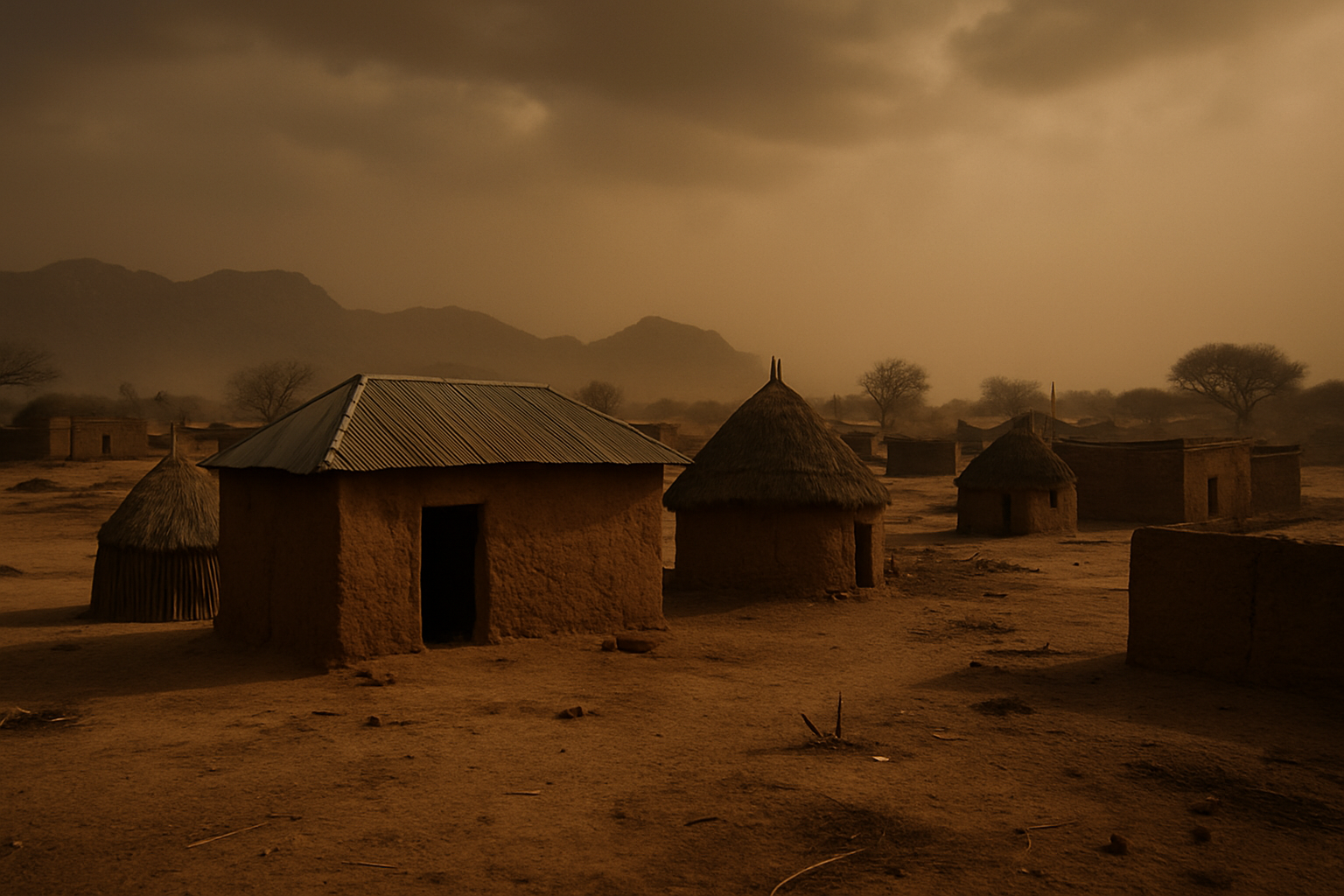
Armed gunmen killed at least 50 people in a brutal attack on Tungan Dutsi village in Zamfara State's Bukkuyum area, marking another devastating blow to Nigeria's deteriorating security situation in the country's volatile northern regions.
The assault began Thursday evening and continued into early Friday, according to reports from Reuters. Attackers systematically set homes ablaze and opened fire on residents in what witnesses described as a coordinated campaign of terror against the rural community.
Local lawmaker reports indicate the death toll has reached "at least 50 people," with the list of missing persons still being compiled, suggesting the final casualty count may rise significantly higher.
Pattern of Escalating Violence
This latest massacre adds to Nigeria's mounting security crisis, which has seen unprecedented expansion from the country's traditional northeastern strongholds to previously stable middle belt regions. The attack follows a devastating pattern of violence that has plagued northern Nigeria throughout early 2026.
In February alone, Nigeria has witnessed multiple large-scale attacks across several states. The most deadly occurred in Kwara State's Kaiama Local Government Area, where coordinated attacks on Woro and Nuku villages resulted in between 162 and 170 deaths, attributed to the Lakurawa group with Islamic State affiliations.
Intelligence reports reveal a concerning trend of communities providing advance warnings about armed groups camping in surrounding bushes, only to have these alerts systematically ignored by authorities. This intelligence failure has been documented as a critical vulnerability that armed groups exploit for operational base establishment and major attack planning.
Zamfara State Under Siege
Zamfara State has become synonymous with banditry and kidnapping operations, with criminal organizations demonstrating increased sophistication in their attacks. The state's remote villages remain particularly vulnerable due to limited security presence and challenging terrain that provides natural hideouts for armed groups.
Recent security operations in the region have eliminated over 400 militants in February 2026 during Balochistan operations alone, yet attacks continue with deadly regularity. The sophisticated nature of these assaults suggests well-organized criminal networks with advanced surveillance capabilities and access to military-grade weapons.
Traditional leaders and community elders have repeatedly called for enhanced protection, with many villages now relying on local vigilante groups and hunters for basic security in the absence of adequate government protection.
Government Response and Institutional Failures
President Bola Ahmed Tinubu's administration has deployed army battalions including specialized forest guards to affected regions, but the attacks continue to escalate. Opposition parties have demanded independent investigations into systematic security sector failures that have allowed such preventable massacres to occur.
The targeting of police stations and government buildings in recent attacks demonstrates a strategic shift by criminal organizations to undermine state authority and create ungoverned spaces. This calculated approach represents a direct challenge to Nigeria's sovereignty in its own territory.
Military sources confirm that operations remain largely reactive rather than proactive against the expanding threat landscape affecting multiple regions simultaneously. The lack of adequate intelligence gathering and rapid response capabilities has left communities vulnerable to sustained assault.
Regional and International Implications
Nigeria's security deterioration has significant implications for West African stability, given the country's status as the region's largest economy and most populous nation. International observers express concern about the impact on trade routes, humanitarian access, and regional development initiatives.
The expansion of terrorist activities shows connections to global extremist networks, with local grievances being exploited by Islamic State affiliates to establish operational bases across multiple Nigerian states. This represents a fundamental threat to regional security architecture.
Enhanced ECOWAS cooperation and international intelligence sharing are increasingly recognized as essential for combating transnational criminal networks operating across borders. However, the Alliance of Sahel States' distance from traditional cooperation frameworks complicates coordinated responses.
Humanitarian Crisis Deepening
The latest attack has created immediate humanitarian needs, with thousands of displaced residents seeking shelter in neighboring communities. Commercial establishments were destroyed during the assault, disrupting local economies and livelihoods that may take years to recover.
Red Cross officials report being overwhelmed by the scale of recent attacks, while aid organizations face increasing access challenges due to deteriorating security conditions. Educational and healthcare facilities have become specific targets, representing a long-term threat to regional development.
The systematic destruction of infrastructure during attacks suggests a deliberate strategy to create lasting economic damage beyond immediate casualties, making community recovery increasingly difficult.
Comprehensive Solutions Needed
Security experts emphasize that military responses alone are insufficient for addressing the root causes of Nigeria's security crisis, including widespread poverty, unemployment, climate effects on agriculture, resource competition, and weak governance structures.
Successful resolution requires addressing criminal recruitment factors, improving intelligence gathering capabilities, enhancing rapid response mechanisms, and building sustainable economic opportunities in affected regions.
The international community's role in providing technical assistance, intelligence sharing, and development support remains crucial for Nigeria's ability to overcome this multifaceted crisis that threatens both national stability and regional security.
As rescue operations continue in Tungan Dutsi village and surrounding areas, the attack serves as another stark reminder of the urgent need for comprehensive security sector reform and coordinated international support to protect Nigeria's vulnerable communities from escalating violence.