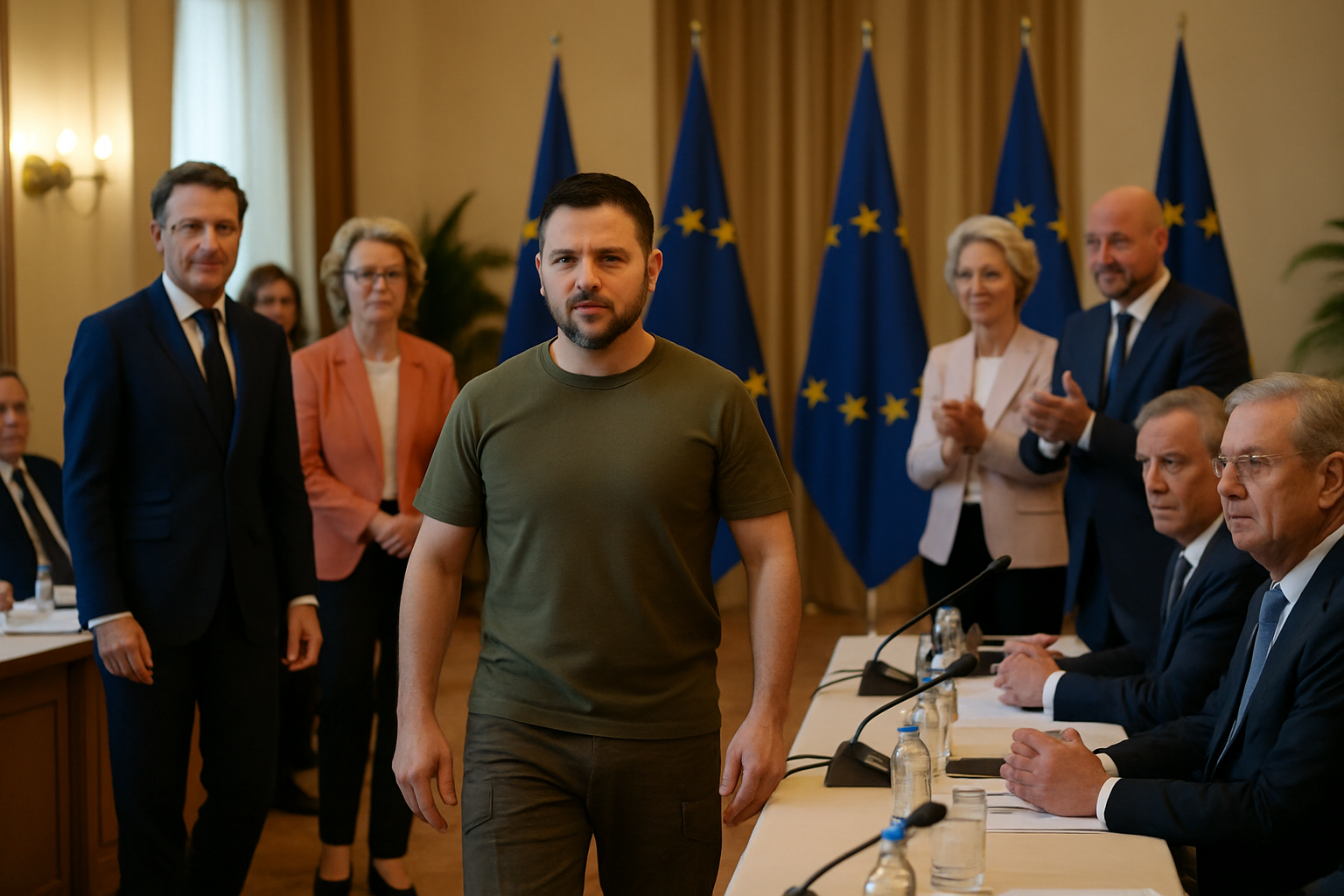
Ukrainian President Volodymyr Zelensky will make an unexpected personal appearance at the informal EU leaders' summit in Ayia Napa, Cyprus, this week, abandoning original plans to address the gathering via video link—a significant diplomatic shift that underscores the critical nature of ongoing discussions over Ukraine's future.
The surprise decision, confirmed across multiple Cypriot media outlets and international sources, represents a marked escalation in diplomatic engagement as European leaders convene Thursday and Friday to address intensive discussions over a massive €90 billion support package for Ukraine and the country's EU membership prospects.
Strategic Pivot to In-Person Diplomacy
Originally scheduled to address the informal leaders' dinner in Ayia Napa through video conference, Zelensky's decision to attend physically signals the heightened stakes surrounding current European discussions on Ukrainian aid and integration. The move comes amid complex negotiations over what would represent one of the largest financial support packages in EU history.
According to sources familiar with the planning, the Ukrainian president is seeking direct face-to-face discussions with EU leaders over the comprehensive support framework, which encompasses both immediate military assistance and longer-term reconstruction efforts. The €90 billion package under consideration would dwarf previous EU aid commitments and establish unprecedented precedents for supporting non-member states.
Cyprus as Strategic Diplomatic Venue
The choice of Cyprus for this crucial diplomatic engagement holds particular significance in the current geopolitical context. The Mediterranean island, currently holding the rotating EU Council presidency for the first half of 2026, has emerged as a strategic hub for regional diplomacy amid escalating Middle Eastern tensions.
Cyprus has demonstrated remarkable resilience in recent months, successfully managing multiple crisis situations including the activation of its ESTIA evacuation plan—the first time in EU history such a continental-wide emergency protocol has been implemented. This crisis management experience has enhanced the island's credibility as a diplomatic venue for high-stakes negotiations.
The informal summit setting in Ayia Napa provides a more relaxed atmosphere for intensive bilateral discussions between Zelensky and individual EU leaders, away from the formal constraints of Brussels protocol. This environment has proven conducive to breakthrough diplomatic progress in previous regional summits.
Financial Package and Membership Trajectory
The €90 billion support package represents far more than immediate humanitarian aid—it constitutes a fundamental strategic investment in Ukraine's European future. The comprehensive framework covers defense procurement, infrastructure reconstruction, institutional capacity building, and democratic governance strengthening.
European leaders are simultaneously addressing Ukraine's EU membership trajectory, with discussions focusing on accelerated integration pathways that could significantly reduce traditional accession timelines. These conversations have gained urgency given the ongoing military pressures and the need to provide Ukraine with concrete European perspectives.
However, the financial commitment faces internal EU resistance, particularly from member states concerned about fiscal implications and precedent-setting for future aid packages. Recent developments have seen some Central and Eastern European countries expressing reservations about the scale and duration of the proposed support.
Regional Context and Broader Implications
Zelensky's Cyprus visit occurs against the backdrop of significant regional diplomatic initiatives. The island has recently hosted multiple high-level meetings, including trilateral security discussions with Greek and French leadership, demonstrating its enhanced role in Eastern Mediterranean diplomacy.
The timing coincides with ongoing efforts to restart stalled peace negotiations, with various international mediation attempts seeking to establish frameworks for conflict resolution. The in-person summit provides an opportunity for Zelensky to coordinate European positions ahead of potential broader international negotiations.
Deputy Minister for European Affairs Marilena Raouna had previously indicated that Zelensky's participation was expected via videoconference, making the shift to personal attendance all the more significant. The last-minute change suggests that developments in recent days have elevated the importance of direct diplomatic engagement.
European Unity Challenges
The summit comes amid ongoing challenges to European unity on Ukraine policy. While broad support exists for continued assistance, debates persist over the appropriate scale, duration, and conditionality of support packages. Some member states have expressed concerns about the long-term fiscal implications of massive aid commitments.
Recent polling indicates that while 89% of Europeans support greater EU unity and 86% desire a stronger global voice, translating this public sentiment into concrete policy agreement remains challenging given diverse national interests and fiscal constraints across the 27-member bloc.
Enhanced cooperation mechanisms—allowing subsets of willing member states to proceed with deeper integration—have gained prominence in recent discussions, potentially providing pathways to advance Ukraine support even without unanimous consent.
Looking Ahead
Zelensky's physical presence at the Cyprus summit is expected to inject new momentum into European Ukraine policy discussions. The face-to-face format allows for the kind of intensive bilateral discussions that have proven crucial in previous diplomatic breakthroughs.
The summit's outcomes will likely influence broader international approaches to the conflict, particularly given ongoing diplomatic initiatives in various international forums. European commitments established in Cyprus could provide important foundation elements for future peace negotiation frameworks.
As European leaders gather in Ayia Napa, the stakes extend beyond immediate aid packages to fundamental questions about Europe's strategic autonomy, collective defense capabilities, and long-term vision for continental security. Zelensky's unexpected decision to attend in person underscores his recognition of these broader implications and the critical nature of current diplomatic opportunities.
The informal summit format, combined with Cyprus's proven crisis management capabilities and strategic Mediterranean location, provides an optimal environment for the kind of innovative diplomatic approaches that the current situation demands. With military pressures continuing and winter approaches, the urgency for concrete European commitments has never been greater.