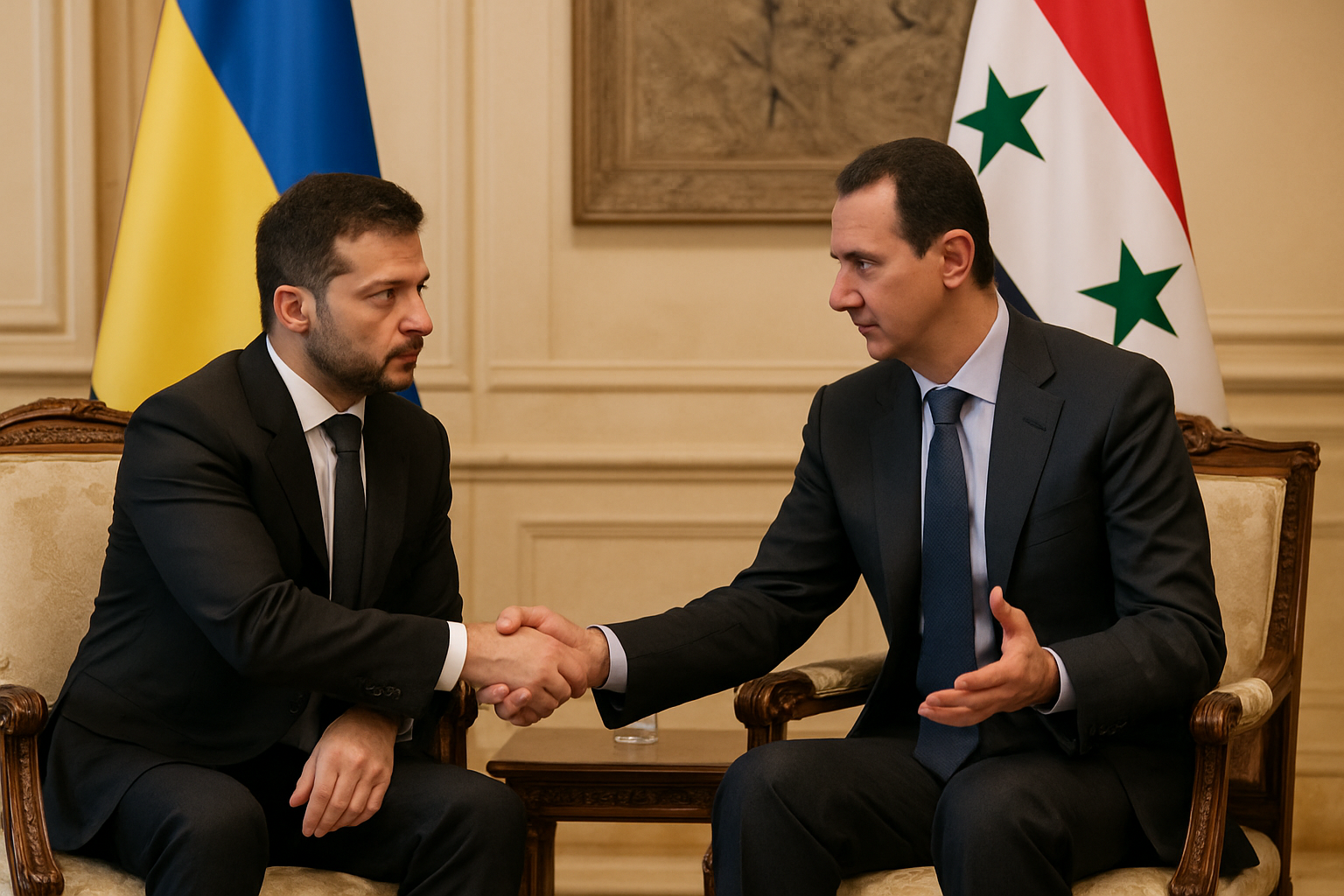
Ukrainian President Volodymyr Zelensky arrived in Damascus on Sunday for his first official visit to Syria, meeting with Syrian President Ahmed al-Sharaa in a historic diplomatic encounter that signals Ukraine's strategic evolution from aid recipient to global security provider amid the ongoing crisis in the Middle East.
The unprecedented visit, which included high-level talks with Syrian officials and a trilateral meeting involving Turkish Foreign Minister Hakan Fidan, represents a significant breakthrough in Ukraine-Syria relations and underscores Kyiv's expanding role in international security cooperation.
Diplomatic Breakthrough Amid Regional Tensions
Zelensky was received at Damascus International Airport by Syrian Foreign Minister Asaad Al-Shaibani and Turkish Foreign Minister Hakan Fidan, marking the first time a Ukrainian president has visited Syrian soil. The visit culminated in formal talks with President al-Sharaa at the presidential palace, with senior officials from both sides in attendance, including Syria's defense minister, intelligence chief, and chief of staff.
"We discussed the situation in the region and prospects for positive change. We also discussed circumstances of Russia's war against Ukraine, and I'm grateful for the support. There is significant interest in exchanging military experience and security expertise."
— Volodymyr Zelensky, Ukrainian President
According to Ukrainian sources, the talks focused on regional and international developments, enhancing cooperation and coordination between the countries, and ensuring the security of food supply routes amid ongoing global tensions.
Security Cooperation Takes Center Stage
The centerpiece of the discussions was military and security cooperation, with both leaders expressing interest in sharing expertise gained from their respective conflicts. This partnership is particularly significant as both nations have faced similar challenges from Iranian-backed forces and Iranian-supplied weapons systems.
During the talks, Zelensky emphasized Ukraine's willingness to share its battlefield experience in combating Iranian Shahed drones—the same weapons systems that have been used against both Ukrainian cities and Middle Eastern targets. This expertise sharing arrangement represents Ukraine's evolution from a nation primarily receiving international aid to one providing security solutions to regional partners.
Trilateral Engagement with Turkey
The visit included a significant trilateral meeting involving Ukraine, Syria, and Turkey, highlighting Turkey's continued role as a regional mediator. Turkish Foreign Minister Hakan Fidan's presence underscored Ankara's complex regional relationships and its position as a NATO ally while maintaining diverse Middle Eastern partnerships.
This trilateral format demonstrates the sophisticated diplomatic approach being pursued by all three nations to address regional security challenges while building sustainable partnerships that transcend traditional alliance structures.
Historical Context and Restored Relations
The visit builds upon the restoration of Ukraine-Syria diplomatic relations in September 2025 at the UN General Assembly, after ties had been severed in 2014. This diplomatic breakthrough represents a major shift in Syria's international engagement as Damascus continues to rebuild relationships with the international community following years of conflict.
Following the talks between Ukrainian Foreign Minister Andrii Sybiha and Syrian Foreign Minister Asaad Hassan al-Shaibani, both sides reached an agreement to reopen embassies in Kyiv and Damascus, further institutionalizing the renewed relationship.
Food Security and Reconstruction Discussions
Beyond security cooperation, the leaders discussed Ukraine's potential role in regional food security. Zelensky emphasized Ukraine's capabilities as a reliable food supplier to the region, drawing on the country's agricultural expertise and global grain export infrastructure.
The discussions also touched on reconstruction cooperation, with Ukraine offering its experience in rebuilding infrastructure under challenging conditions—knowledge gained from managing reconstruction efforts during an active conflict.
Regional Strategic Implications
The visit occurs against the backdrop of significant regional upheaval, including the suspended trilateral Ukraine-Russia-US peace negotiations due to the Iran crisis. This timing highlights Ukraine's strategy of diversifying its international partnerships and building new security relationships while traditional diplomatic channels remain stalled.
For Syria, hosting the Ukrainian president signals growing international acceptance and potential for new reconstruction partnerships. It represents continued international engagement as Damascus seeks to rebuild diplomatic relationships and attract investment for post-conflict recovery.
Broader Middle Eastern Context
The Ukraine-Syria partnership fits into a broader pattern of Ukrainian engagement across the Middle East. Ukraine has already deployed over 200 military specialists to Gulf states including the UAE, Qatar, Jordan, Bahrain, and Kuwait, sharing expertise in combating Iranian drone attacks.
This regional engagement demonstrates Ukraine's sophisticated approach to building coalitions beyond traditional European alliance structures, creating leverage through security partnerships that benefit all parties involved.
Iranian Connection and Shared Challenges
A key element driving Ukraine-Syria cooperation is their shared experience with Iranian military technology. The same Shahed drones that have devastated Ukrainian cities are being used across the Middle East, creating natural opportunities for cooperation in developing countermeasures and sharing defensive strategies.
This connection provides both nations with practical benefits while strengthening their positions in negotiations with Iran and its regional proxies.
International Response and Future Prospects
The international community is watching this partnership development closely, particularly as it demonstrates innovative approaches to conflict resolution and security cooperation. The success of this Ukraine-Syria engagement could provide a template for similar partnerships between nations facing comparable security challenges.
The visit also reflects the changing dynamics of international relations, where countries are increasingly forming partnerships based on shared practical needs rather than traditional geopolitical alignments.
Looking Ahead: Sustainable Partnership Framework
As both nations work to establish long-term cooperation mechanisms, the focus will be on creating sustainable frameworks that can weather regional political changes. The embassy reopening and ongoing security cooperation suggest both sides are committed to building a durable partnership.
The success of this initiative may influence how other nations approach similar security partnerships and could contribute to new models of international cooperation in an increasingly complex global security environment.
This historic visit represents not just a bilateral diplomatic breakthrough, but a demonstration of how nations can transform challenging circumstances into opportunities for innovative international partnerships that enhance security and stability for all parties involved.