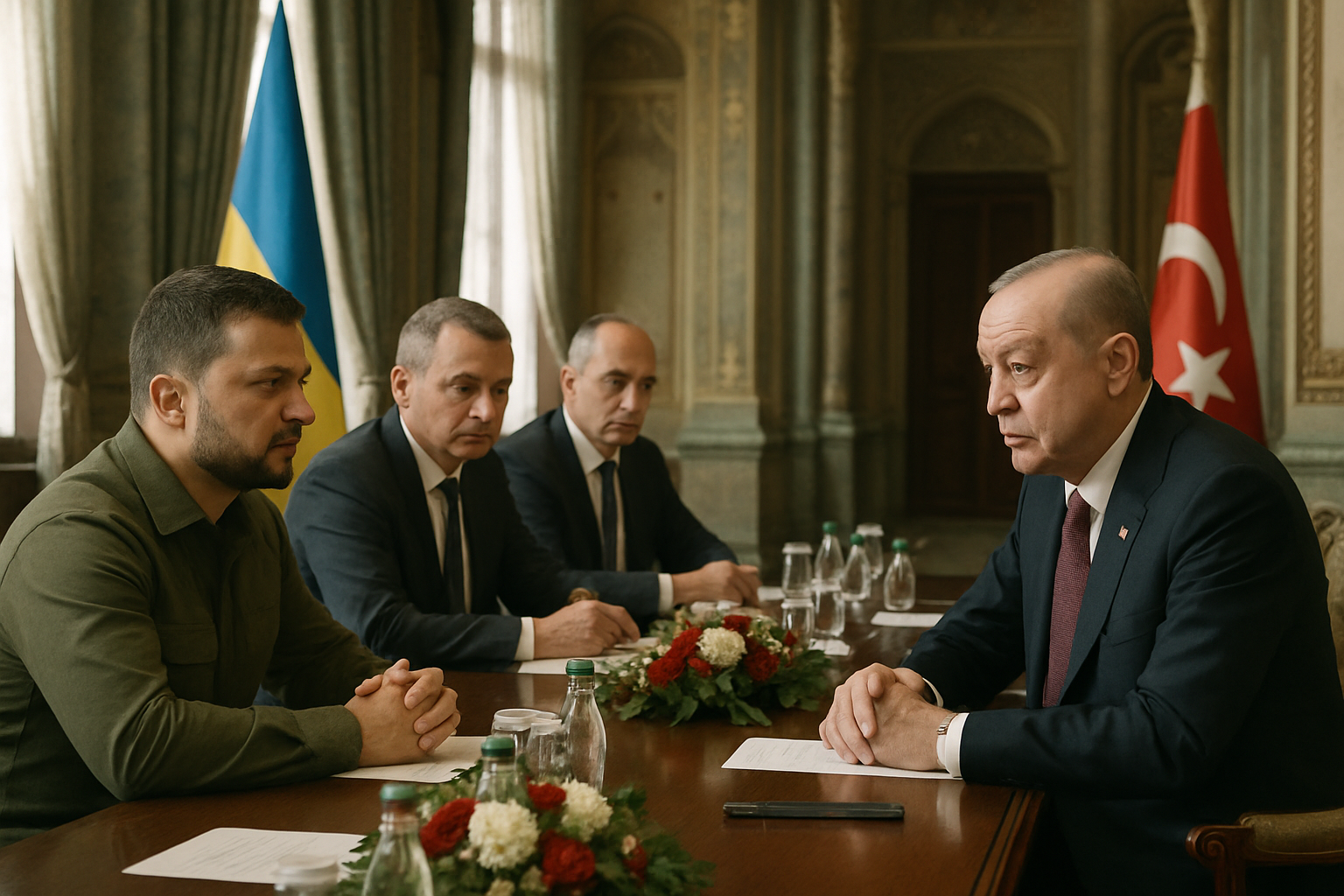
Ukrainian President Volodymyr Zelensky engaged in pivotal diplomatic discussions with Turkish President Recep Tayyip Erdogan and Ecumenical Patriarch Bartholomew in Istanbul on April 4, 2026, as Ukraine seeks to maintain international momentum while peace talks with Russia remain indefinitely suspended due to the Iran crisis.
The high-stakes meetings in Turkey's largest city come at a critical juncture in the Ukraine war, with Russia launching some of its most devastating attacks in recent weeks while diplomatic efforts to end the conflict have stalled. The Istanbul talks focused on strengthening security cooperation and addressing the plight of Ukrainian children affected by the war.
Erdogan-Zelensky Security Cooperation Agreement
President Zelensky announced on Facebook that he and Turkish President Erdogan had reached an agreement on "new steps to strengthen security cooperation" during their meeting in Istanbul. The discussions covered bilateral relations, the situation in Europe, and the Middle East crisis.
"We discussed bilateral relations between our countries, as well as the situation in Europe and the Middle East. It is important that joint and coordinated actions strengthen the protection of life and help ensure greater security for people in every part of the world."
— Volodymyr Zelensky, Ukrainian President
According to the Turkish presidency, Erdogan "emphasized the importance that Turkey attaches to the security of navigation in the Black Sea and the crucial nature of energy supply security." The Turkish leader also reaffirmed his country's continued support for negotiations between Ukraine and Russia, stating that "the region needs greater peace and stability."
Meeting with Ecumenical Patriarch Bartholomew
Zelensky's meeting with Ecumenical Patriarch Bartholomew addressed the humanitarian crisis facing Ukrainian children and the development of the Orthodox Church in Ukraine. The discussions focused on Ukrainian children suffering due to Russian aggression, highlighting the human cost of the ongoing conflict.
The meeting with the spiritual leader of Eastern Orthodox Christianity worldwide demonstrates Ukraine's efforts to maintain international religious and moral support for its cause. The Patriarch's involvement underscores the global religious community's concern about the war's impact on civilians, particularly children.
Devastating Russian Attacks Continue
While diplomatic efforts continued in Istanbul, Russia intensified its military operations across Ukrainian territory. Recent attacks have targeted critical infrastructure and civilian areas, with significant casualties reported in multiple regions.
Russian forces carried out more than 50 attacks on three districts of the Dnipropetrovsk region on Saturday, with the city of Nikopol suffering the heaviest bombardment. The attacks killed at least five civilians and wounded 27 others, with three of the dead being women. Russian missiles and drones also struck the Kovpakivskyi district of Sumy, injuring a 52-year-old man and damaging two vehicles.
Peace Talks Indefinitely Suspended
The Istanbul meetings take place against the backdrop of indefinitely suspended trilateral peace negotiations between Ukraine, Russia, and the United States. The talks, which had shown unprecedented momentum following breakthrough achievements in February 2026, including a historic 314-prisoner exchange and the restoration of US-Russia military communications after a four-year suspension, have been derailed by the Iran crisis.
The February breakthroughs had achieved "significant progress" on ceasefire monitoring mechanisms during Geneva talks, with European "Big 5" observers (Germany, France, Italy, UK, Poland) participating for the first time. However, territorial disputes remain unchanged, with Russia demanding recognition of occupied eastern Ukrainian territories and Ukraine maintaining its territorial integrity position.
Trump Administration's June Deadline Uncertain
The Trump administration had established a June 2026 deadline for comprehensive peace agreements, with Washington venue talks potentially involving presidential-level engagement. However, competing Middle East priorities have created uncertainty about this timeline.
The suspension represents a major setback to what many observers considered the most significant diplomatic opportunity since the conflict began. Framework achievements remain intact, including prisoner exchange mechanisms and Pentagon-Moscow deconfliction protocols covering Syria, Arctic, and Africa operations.
Ukraine's Strategic Evolution
Despite the diplomatic setbacks, Ukraine has evolved from an aid recipient to a security provider, deploying over 200 military specialists to Middle Eastern countries including the UAE, Qatar, Jordan, Bahrain, and Kuwait. These experts are helping combat Iranian Shahed drones – the same weapons that have been devastating Ukrainian infrastructure.
This strategic pivot demonstrates Ukraine's growing international partnerships and its unique battlefield experience in dealing with modern warfare technologies, particularly drone warfare that has become a defining feature of 21st-century conflicts.
International Support Amid Divisions
International support for Ukraine remains substantial but faces political divisions. The European Union has approved a historic €90 billion loan package – the largest single-nation assistance ever – though Slovakia, Czech Republic, and Hungary refused participation, exposing deep European divisions.
Additional support continues from key allies, including Sweden-Denmark's €246 million air defense package, Germany's provision of 35 Patriot missiles, and the UK's revelation of four operational maintenance and repair facilities in Ukraine servicing Western equipment.
Nuclear Governance Crisis
The diplomatic efforts occur amid an unprecedented nuclear governance crisis. The New START treaty between the US and Russia expired on February 5, 2026, marking the first time in over 50 years without bilateral nuclear constraints between the superpowers. Both nations control approximately 80% of the world's nuclear weapons, creating what UN Secretary-General António Guterres called a "grave turning point" with nuclear risks at their "highest in decades."
Humanitarian Toll
The human cost of the conflict continues to mount. President Zelensky has disclosed that 55,000 Ukrainian soldiers have been officially killed, with a "large number" missing in action. International estimates suggest actual casualties may be 2-3 times higher. Over 17.8 million Ukrainians are accessing winter support programs as energy infrastructure remains under systematic attack.
The systematic targeting of civilian infrastructure, including energy facilities during extreme winter conditions, has been documented as violating Geneva Conventions. Energy "terrorism" has left over 1,170 Kyiv buildings with inadequate heating, while Ukrainian nuclear plants were forced to halt electricity production for the first time in the conflict.
Global Implications
The stakes of the Ukraine conflict extend far beyond the region's borders. Success in eventual resumed peace talks could end Europe's deadliest war since World War II and provide a template for 21st-century conflict resolution. Failure may lead to continued military escalation with global implications for territorial sovereignty principles and international law enforcement.
The conflict has already reshaped European security architecture, with the Munich Security Conference describing the current era as one of "disruptive politics" where the "post-war order no longer exists." France has initiated discussions about expanding its nuclear deterrent beyond national scope for the first time since the Cold War.
Looking Ahead
The timeline for resumed peace negotiations depends on the resolution of the Iran crisis. Framework preservation allows for reactivation when conditions permit, but the fundamental territorial disagreements between Russia and Ukraine remain unchanged.
Ukraine continues to maintain operational capabilities while expanding international partnerships, potentially creating new leverage for future diplomatic conditions. The success or failure of eventual resumed talks carries global implications for territorial dispute resolution innovation versus continued military approaches in determining European security redefinition for decades to come.
As the conflict approaches its fourth anniversary, the Istanbul diplomatic meetings represent Ukraine's continued efforts to maintain international support and momentum, even as the most promising peace initiative since the war began remains suspended by competing global crises. The meetings underscore the complex interconnections between regional conflicts in the modern multipolar security environment and the challenges facing the international community in managing simultaneous crises while preserving diplomatic momentum for Europe's most significant security challenge since the Cold War.