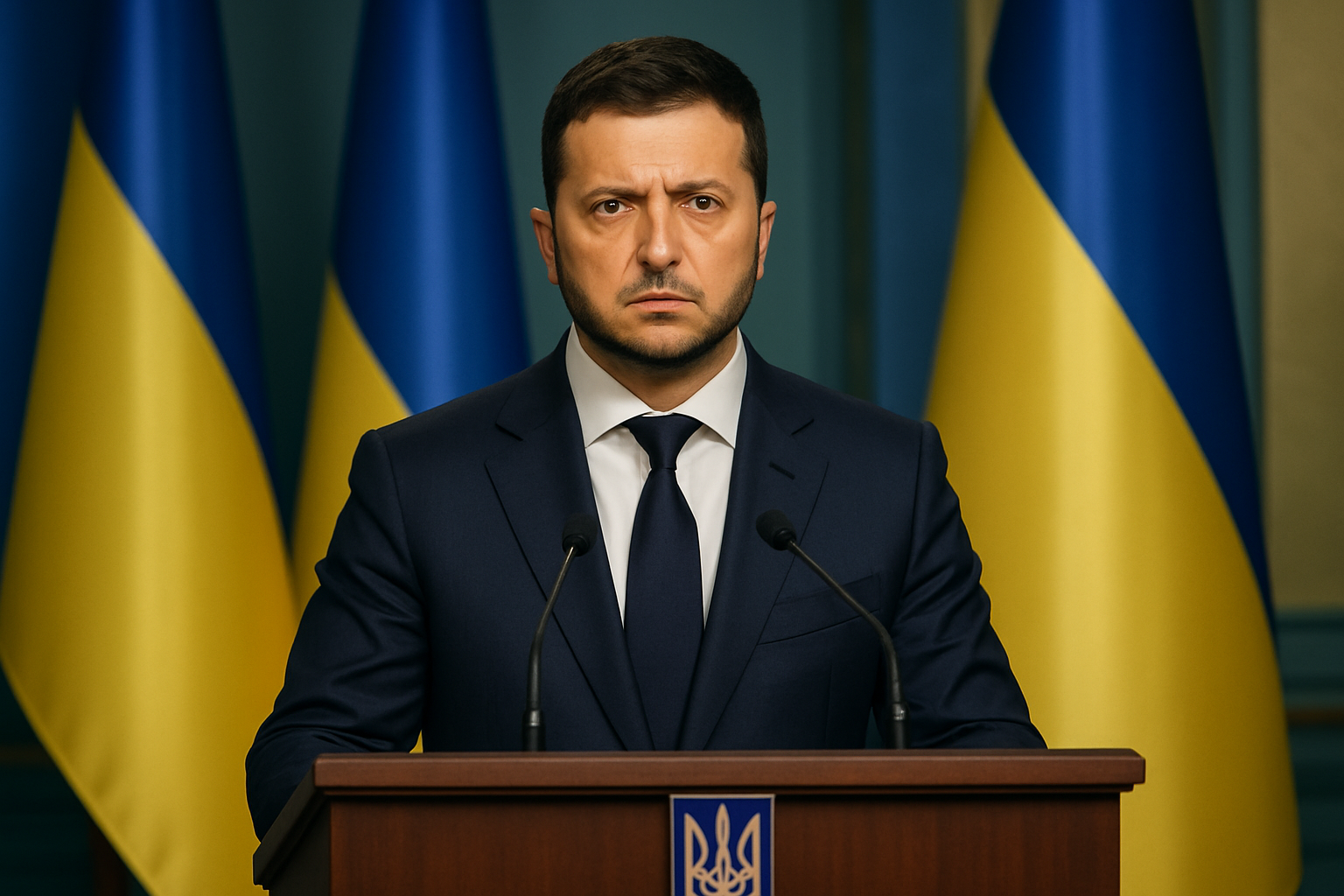
Ukrainian President Volodymyr Zelensky has categorically rejected any peace agreement that would require Ukraine to unilaterally withdraw forces from the eastern Donbas region and hand territorial control to Russia, while criticizing President Trump's approach to pressuring Ukraine rather than Russia in ongoing negotiations.
In a candid interview with Axios published Tuesday, Zelensky declared that the Ukrainian people would never accept a peace deal involving the surrender of territory in the Donbas, emphasizing that such an arrangement would be viewed as a "failure story" by Ukrainian citizens. The statement comes as the third round of direct negotiations between Ukrainian and Russian negotiators continues in Geneva, with territorial control remaining the primary point of disagreement.
Critical Stance on Trump Administration Pressure
Zelensky expressed particular concern about what he characterized as undue pressure from the Trump administration, specifically criticizing the U.S. President's public calls for Ukrainian concessions. "It's not fair that Trump keeps publicly calling on Ukraine, not Russia, to make concessions in negotiating terms for a peace plan," Zelensky stated, according to the Axios report.
The Ukrainian leader's criticism comes amid reports that Trump has been exerting significant pressure on Ukraine to reach a resolution to the nearly four-year conflict. Trump recently declared aboard Air Force One that "Ukraine better come to the table for talks and quickly," highlighting the administration's urgency to achieve a diplomatic breakthrough.
"The path to lasting peace cannot be 'give up everything,'" Zelensky emphasized, warning against imposing agreements that Ukrainian citizens would reject.
— President Volodymyr Zelensky
Geneva Negotiations Face Territorial Deadlock
The current round of Geneva talks represents the evolution of diplomatic efforts that began with breakthrough discussions in Abu Dhabi, which achieved a historic 314-prisoner exchange in February—the first such swap in five months. Despite this humanitarian success and the restoration of U.S.-Russia military communications after a four-year suspension, the fundamental territorial disputes remain unresolved.
Russian territorial gains have accelerated significantly, with Moscow's forces capturing 481 square kilometers in January 2026 compared to 260 square kilometers in December 2025. This military pressure coincides with Russia's systematic targeting of Ukrainian energy infrastructure, leaving over 1,170 buildings in Kyiv without heating during extreme winter temperatures of minus-30°C.
Systematic Civilian Targeting Continues
The humanitarian crisis has deepened with Russia's continued "winter weapon" strategy, targeting civilian infrastructure during life-threatening cold conditions. Recent attacks in Bohodukhiv killed four civilians, including three young children—two one-year-olds and one two-year-old—along with their father. This marked the second deadly attack on the same town within three days, demonstrating what Ukrainian officials describe as systematic civilian targeting in violation of the Geneva Conventions.
Ukrainian officials report that 55,000 Ukrainian soldiers have been officially confirmed killed since the conflict began, with a "large number" still classified as missing in action. International estimates suggest actual military casualties could be two to three times higher when including undocumented deaths and missing personnel.
International Support Amid Diplomatic Tensions
Despite the territorial stalemate, Ukraine continues to receive substantial international backing. The European Union approved a historic €90 billion loan package—the largest ever for a single nation—though Slovakia, Czech Republic, and Hungary refused to participate, revealing divisions within the bloc. Additional support includes Sweden and Denmark's €246 million air defense package featuring Tridon Mk2 systems, and Germany's provision of 35 Patriot missiles.
The nuclear governance crisis adds urgency to diplomatic efforts. The New START treaty between the U.S. and Russia expired on February 5, 2026, marking the first time in over 50 years without nuclear constraints between the superpowers. UN Secretary-General António Guterres warned of a "grave turning point" with nuclear risks at their highest level in decades.
American Mediation Under Scrutiny
Zelensky's criticism of Trump's approach reflects broader Ukrainian frustration with what they perceive as unbalanced pressure in the peace process. American mediators Steve Witkoff and Jared Kushner have reportedly conveyed assessments that Russia desires an end to the war, though Zelensky remains skeptical about Moscow's genuine commitment to peace.
The Ukrainian president has been particularly vocal about the need for comprehensive security guarantees spanning 20-30 years, contrasting with reported U.S. proposals for 15-year arrangements. This disagreement over the duration and scope of security assurances represents another significant hurdle in achieving a lasting peace agreement.
European Divisions and Strategic Autonomy
European responses to the crisis reveal significant divisions in approach. Germany opposes direct talks with Putin, citing "maximalist demands," while France and Italy support broader diplomatic engagement. These divisions occurred against the backdrop of discussions at the Munich Security Conference, where European leaders addressed the need for greater strategic autonomy amid concerns about long-term American security guarantee reliability.
The systematic targeting of Ukrainian energy infrastructure has forced nuclear power plants to halt electricity production for the first time since the conflict began, prompting warnings from the International Atomic Energy Agency about risks to European nuclear security.
Looking Ahead: June Deadline Looms
The Trump administration has established a June 2026 deadline for a comprehensive peace agreement, with talks potentially moving to Washington and involving presidential-level engagement. This timeline creates unprecedented pressure for innovative solutions to territorial disputes that have proven intractable through traditional diplomatic approaches.
The evolution from Abu Dhabi to Geneva to potentially Washington suggests a deliberate escalation of diplomatic engagement, with each venue offering unique advantages: UAE neutral hosting, Swiss institutional mediation, and U.S. executive implementation authority. However, the fundamental challenge remains bridging Ukraine's territorial integrity position with Russia's demands for territorial recognition.
Stakes Beyond Ukraine
The outcome of these negotiations extends far beyond the immediate conflict, affecting European security architecture, international law enforcement, and territorial sovereignty principles for the 21st century. Success could provide a template for resolving complex territorial disputes in an era of great power competition, while failure might intensify military operations globally and undermine confidence in diplomatic solutions.
As winter conditions worsen and military operations continue, the humanitarian cost mounts daily. Over 17.8 million Ukrainians are accessing winter support programs, while emergency warming centers operate across regions affected by infrastructure attacks. The systematic nature of these attacks during diplomatic engagement raises questions about the coordination between military pressure and negotiating tactics.
Zelensky's firm rejection of territorial concessions reflects not only his personal position but the broader Ukrainian public sentiment, which polls suggest would overwhelmingly reject any referendum involving territorial surrender to Russia. This democratic constraint adds another layer of complexity to negotiations already complicated by military realities, international law considerations, and competing geopolitical interests.
The coming weeks will prove decisive in determining whether the diplomatic momentum achieved through prisoner exchanges and communications restoration can translate into breakthrough solutions for territorial disputes, or whether the conflict will continue its trajectory of military escalation amid failing diplomacy.