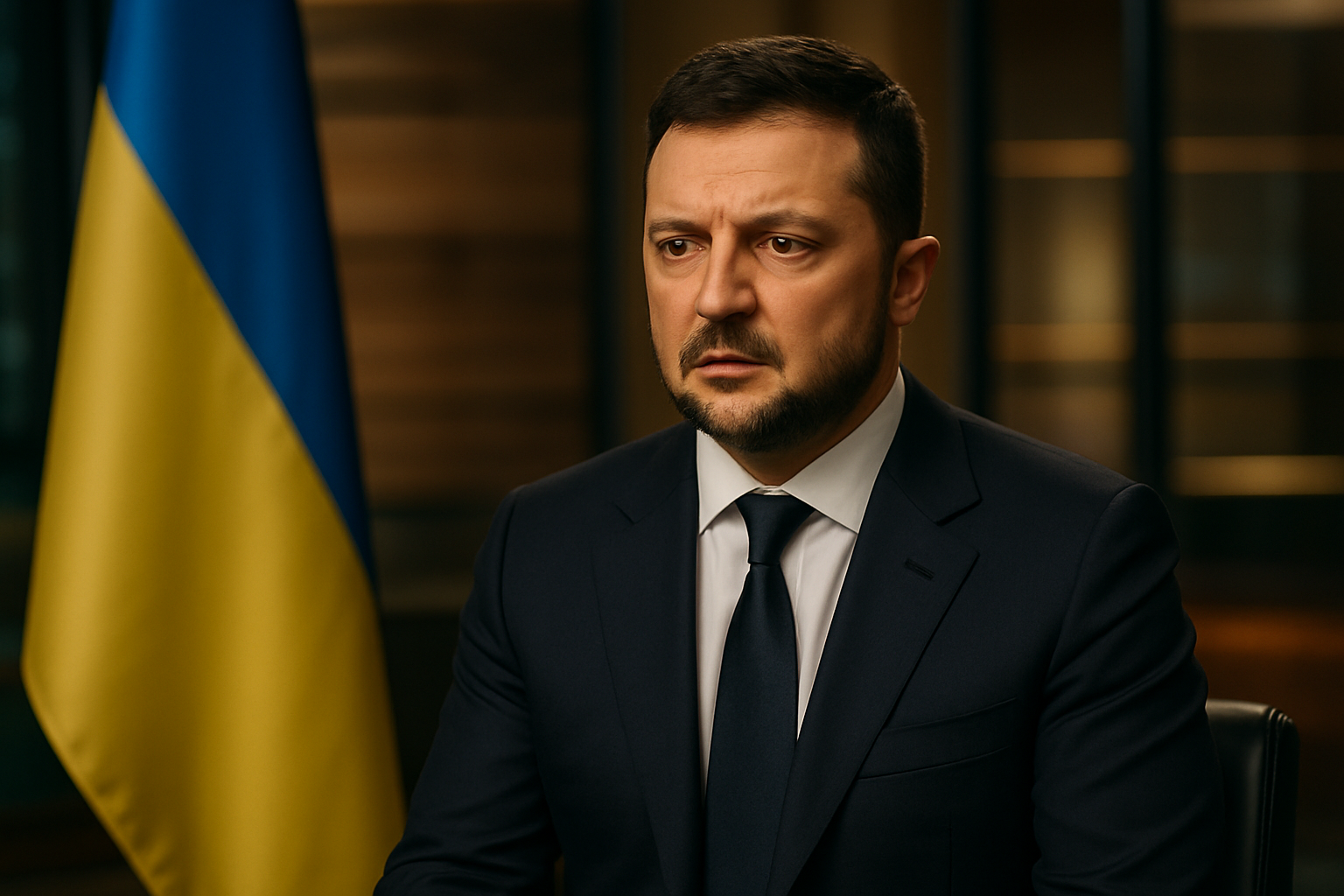
Ukrainian President Volodymyr Zelensky has revealed that approximately 55,000 Ukrainian soldiers have been killed since Russia's full-scale invasion began in February 2022, marking the first official casualty figure disclosed by Ukrainian leadership in nearly a year.
The sobering announcement came during a prerecorded interview with French television France 2, broadcast Wednesday evening, as diplomatic efforts to end the nearly four-year conflict continue with what officials describe as "productive" trilateral peace talks between Ukraine, Russia, and the United States in Abu Dhabi.
"In Ukraine, officially, the number of soldiers killed on the battlefield, whether they are career soldiers or mobilized, is 55,000," Zelensky stated during the interview. He emphasized that this figure represents only confirmed battlefield deaths of Ukrainian military personnel, noting that there is also "a large number of people that Ukraine considers missing."
Context of the Disclosure
The casualty revelation comes amid a critical juncture in the conflict, with multiple sources confirming that the actual death toll could be significantly higher. International research centers estimate that the true number of Ukrainian military deaths could be two to three times the official figure when accounting for missing personnel, civilian casualties, and undocumented deaths.
Zelensky's decision to disclose these figures appears strategically timed, occurring just as peace negotiations in Abu Dhabi enter their second day. The Ukrainian delegation, led by Defense Minister Rustem Umerov, described the first day of talks as "substantial and productive," according to multiple diplomatic sources.
The disclosure also came against the backdrop of what energy company DTEK described as Russia's "most powerful blow" of 2026 against Ukrainian energy infrastructure, leaving over 1,170 buildings in Kyiv without heating during extreme winter conditions with temperatures dropping to minus-30°C in some regions.
Diplomatic Progress in Abu Dhabi
The trilateral negotiations, involving Ukrainian Defense Minister Rustem Umerov, Russian military intelligence director Igor Kostyukov, and US Special Envoy Steve Witkoff, represent the most significant diplomatic engagement between the parties since the conflict began. The talks, hosted by the UAE in its neutral capacity, have been structured with separate working groups addressing different aspects of the conflict before joint position synchronization sessions.
According to diplomatic sources familiar with the proceedings, the main sticking point remains the long-term fate of eastern Ukrainian territories currently under Russian control. However, progress appears to have been made on humanitarian issues, with Zelensky expressing expectations for the first prisoner exchange with Russia in four months.
The negotiations have continued despite Russia's massive energy infrastructure attack, which broke an informal agreement between President Trump and President Putin to avoid targeting energy facilities during the diplomatic talks. The attack affected eight Ukrainian oblasts, forcing emergency warming centers to be activated across the affected regions.
International Response and Support
NATO Secretary-General Mark Rutte made a surprise visit to Kyiv on Tuesday, addressing the Ukrainian Parliament and condemning the Russian attacks as sending a "bad signal" before the negotiations. The visit underscored continued Western support for Ukraine's diplomatic efforts while maintaining pressure on Russia to engage constructively.
European Union member states have approved a historic €90 billion loan mechanism for Ukraine's defense and reconstruction needs, representing the largest EU financial assistance package in history. The loan is expected to begin disbursements in the second quarter of 2026, providing crucial support for both military funding and civilian budget needs over the next two years.
Poland has deployed fighter jets preemptively in response to the recent Russian attacks, while Sweden and Denmark announced a €246 million air defense package, including advanced Tridon Mk2 systems. These moves demonstrate continued European solidarity despite some divisions, with Slovakia, Czech Republic, and Hungary declining to participate in the EU loan financing.
Military Situation and Strategic Context
The casualty disclosure comes as Russian forces have accelerated their territorial gains, capturing 481 square kilometers in January 2026 compared to 260 square kilometers in December 2025, according to the Institute for Study of War. Russia has shifted to what Ukrainian officials describe as "logistics terror," targeting transportation infrastructure and killing over 20 civilians in recent days.
Over 10,000 Russian drones and bombs were launched in January 2026 alone, representing a significant escalation in the conflict's intensity. The attacks have particularly targeted energy workers, with a February 1 drone strike killing 15 DTEK energy workers returning from their shift in Dnipropetrovsk region.
In response to the technological warfare aspect, SpaceX has successfully implemented measures to block Russian use of Starlink satellite internet for controlling attack drones, following cooperation between Elon Musk and Ukrainian Defense Minister Umerov. This technological countermeasure represents a significant advantage for Ukrainian forces while maintaining legitimate service for Ukrainian users.
Humanitarian Crisis and International Aid
The human cost of the conflict extends far beyond military casualties. Over 17.8 million Ukrainians are currently accessing winter support programs as the country faces its harshest winter conditions since the invasion began. The recent Russian attacks on energy infrastructure have created a humanitarian crisis, with entire districts in major cities left without heating during life-threatening temperatures.
The World Bank has allocated $40 million for energy system restoration, while emergency warming centers have been activated across Ukraine. The attacks represent what many observers see as Russia's use of winter weather as a weapon of war, deliberately timing infrastructure strikes during the most vulnerable periods.
Zelensky noted during his interview that Russia would need to sacrifice an additional 800,000 soldiers over the next two years if it wished to militarily capture eastern Ukraine, highlighting the enormous human cost that continued conflict would entail for all parties.
Looking Forward: Diplomatic Opportunities
Despite the grim casualty figures and ongoing military escalation, diplomatic sources express cautious optimism about the Abu Dhabi talks. The trilateral format, with full US participation under Special Envoy Steve Witkoff, represents a significant evolution from previous technical discussions to substantive political negotiations.
The expected prisoner exchange, if successfully negotiated, could serve as a crucial confidence-building measure and demonstrate that productive cooperation remains possible even amid active conflict. Such exchanges have historically served as stepping stones to broader diplomatic breakthroughs in protracted conflicts.
However, significant challenges remain. The Kremlin continues to insist that any direct talks between Putin and Zelensky must occur only in Moscow, while European divisions persist over engagement strategies. Germany maintains opposition to direct Putin talks due to what officials describe as "maximalist demands," while France and Italy support continued diplomatic channels.
"Vladimir Putin has no fear of Europeans; he only fears Trump," Zelensky stated during his France 2 interview, highlighting the complex dynamics at play in the diplomatic process.
— President Volodymyr Zelensky
Implications for European Security
The conflict's toll, as revealed in Zelensky's casualty figures, underscores the broader implications for European security architecture. The war has fundamentally altered the continental security landscape, with NATO countries significantly increasing defense spending and military readiness along the alliance's eastern borders.
The UAE's role as neutral host for the talks reflects the increasingly global nature of the conflict's resolution, with Middle Eastern countries playing crucial mediation roles traditionally filled by European powers. This shift represents a significant evolution in international diplomatic practice and regional influence patterns.
As the talks continue through the week, they may establish the framework for higher-level negotiations, potentially determining whether diplomatic solutions can prevail over continued military escalation. The human cost, as starkly illustrated by the 55,000 Ukrainian military deaths, provides urgent impetus for all parties to find sustainable political solutions to what has become Europe's deadliest conflict since World War II.
The coming days will be crucial in determining whether the apparent progress in Abu Dhabi can translate into concrete agreements that might begin to address the fundamental territorial and security questions that have driven this devastating conflict for nearly four years.