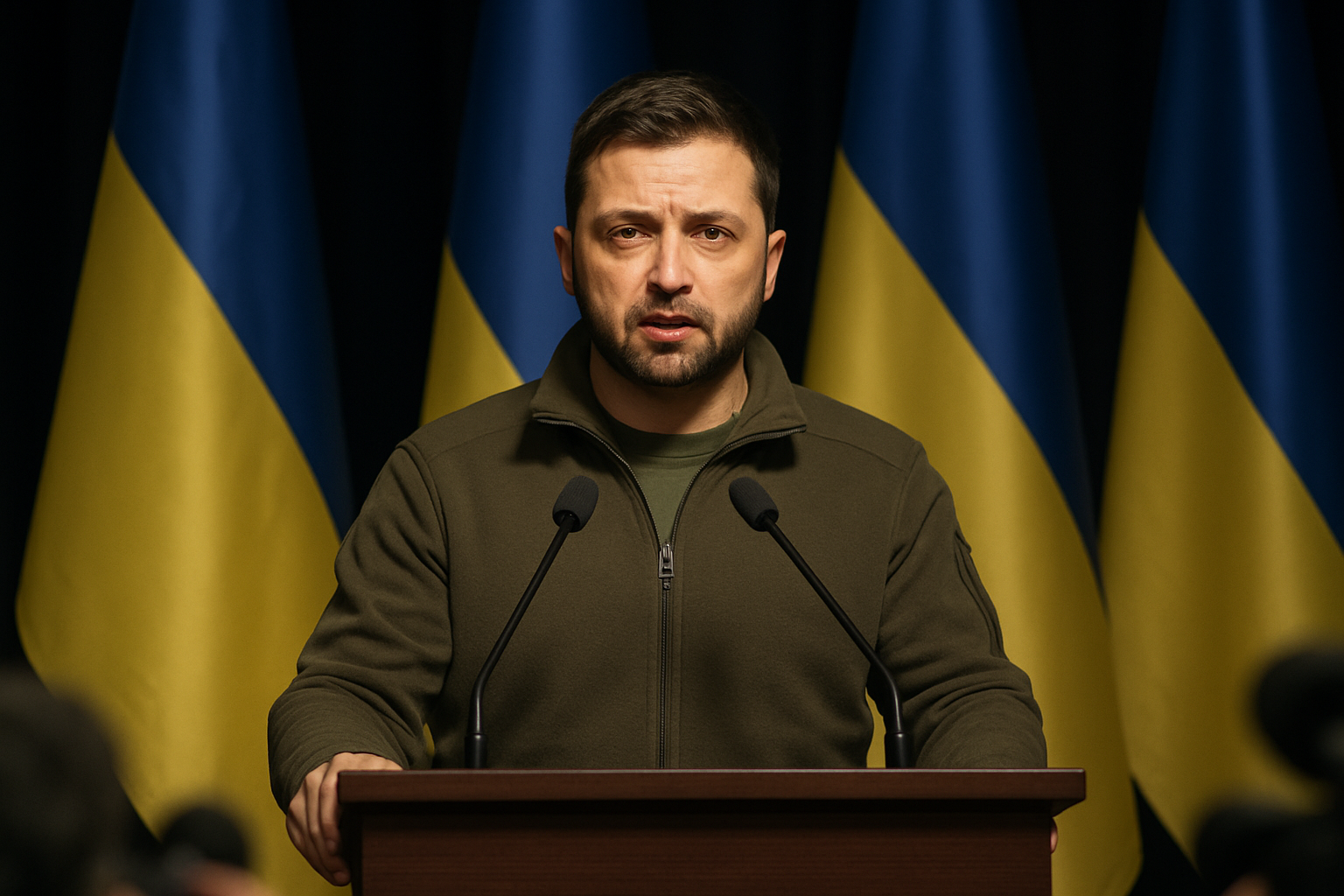
Ukrainian President Volodymyr Zelensky has categorically stated that Ukraine will not hold presidential elections until a ceasefire with Russia is achieved and comprehensive security guarantees are in place, dismissing recent media speculation about imminent election announcements.
Speaking to journalists on February 11, 2026, Zelensky firmly rejected reports from the Financial Times claiming he planned to announce presidential elections and a peace referendum on February 24, marking the fourth anniversary of Russia's invasion.
"About the intention to announce on February 24 [2026], I'm hearing this for the first time. I first heard it from the Financial Times. Now I'm hearing it from you for the second time," Zelensky told reporters. "We approach elections when there are all appropriate security guarantees."
International Pressure for Democratic Process
The Ukrainian leader's statements come amid mounting international pressure, particularly from the Trump administration, for Ukraine to transition toward democratic elections. Multiple European sources have confirmed that the United States has been pushing Ukraine to announce presidential elections by May 15, 2026, with threats of reduced security guarantees if the timeline is not met.
This would mark Ukraine's first national elections since Zelensky's victory in 2019, potentially ending the martial law period that has been in effect since the February 2022 Russian invasion. The electoral process represents a critical test of democratic governance under extraordinary wartime circumstances.
"Ukrainians want and support elections, but voting during wartime conditions faces several obstacles."
— Maxim Fedorov, Finnish Correspondent
Diplomatic Breakthrough Creates Opening
Zelensky's election conditions statement occurs against the backdrop of unprecedented diplomatic progress. Recent trilateral peace talks in Abu Dhabi between Ukraine, Russia, and the United States achieved historic breakthroughs, including a 314-prisoner exchange - the first in five months - and the restoration of US-Russia military communications after a four-year suspension.
Ukrainian Defense Minister Rustem Umerov described the Abu Dhabi talks as "substantial and productive," with detailed discussions on ceasefire implementation and monitoring mechanisms. However, the fundamental sticking point remains the eastern Ukrainian territories currently under Russian control.
The talks have established momentum for continued negotiations, with future meetings expected to take place in the United States, suggesting potential escalation to presidential-level involvement. The Trump administration has set a June 2026 deadline for comprehensive peace agreement, creating unprecedented pressure for territorial compromise solutions.
Security Concerns Override Political Pressure
Despite international pressure for democratic renewal, Zelensky emphasized that security considerations must take precedence over electoral timelines. The Ukrainian Presidential Office has consistently maintained that "elections are only possible when the security situation permits," while not opposing elections in principle.
The challenge of conducting free and fair elections during active conflict presents numerous obstacles. With ongoing Russian attacks targeting civilian infrastructure and territorial control disputes unresolved, ensuring electoral integrity across Ukrainian territory remains practically impossible.
Recent Russian escalation has intensified these concerns. In February 2026 alone, Russia launched what DTEK described as the "most powerful blow" against Ukrainian energy infrastructure, leaving over 1,170 buildings in Kyiv without heating during minus-30°C temperatures. Such attacks demonstrate the continued threat to civilian safety that would complicate any electoral process.
International Stakes and Regional Context
The timing of Ukraine's potential elections carries significant international implications. The European Union recently approved a historic €90 billion loan package for Ukraine - the largest EU financial assistance package ever for a single nation. This unprecedented commitment demonstrates European confidence in Ukrainian statehood persistence through diplomatic and military resolution phases.
NATO allies remain divided on engagement strategies. Germany continues to oppose direct Putin talks, while France and Italy support broader diplomatic engagement. Sweden and Denmark have announced a €246 million air defense package, while World Bank allocated $40 million for energy restoration efforts.
The nuclear context adds urgency to diplomatic solutions. The New START treaty between the US and Russia expired on February 5, 2026, marking the first time in over 50 years without nuclear arms control between the superpowers. This creates additional pressure for innovative diplomatic solutions to prevent further international destabilization.
Path Forward Requires Innovation
The intersection of democratic transition and active conflict presents unprecedented challenges for international law and conflict resolution. Ukraine's position that elections require security guarantees and ceasefire conditions reflects the complex reality of maintaining democratic institutions under extraordinary circumstances.
Success in achieving both peace and democratic renewal could provide a template for 21st-century conflict resolution, combining military pressure, sustained diplomacy, and democratic processes. However, the fundamental disagreement over territorial integrity versus Russian territorial gains remains the core challenge requiring innovative compromise solutions.
As diplomatic momentum builds through the Abu Dhabi framework toward potential Washington-venue talks, the international community watches whether breakthrough territorial compromise can be achieved while preserving democratic governance principles and territorial sovereignty under international law.
Humanitarian Crisis Continues
Meanwhile, Ukraine faces a severe humanitarian crisis that underscores the urgency of both peace and electoral solutions. Over 17.8 million Ukrainians are accessing winter support programs, while systematic energy infrastructure attacks have created life-threatening conditions during extreme winter weather.
Zelensky has disclosed that 55,000 Ukrainian soldiers have been officially confirmed killed since the invasion began, with a "large number" still missing in action. International estimates suggest actual military casualties could be 2-3 times higher, highlighting the human cost that adds moral urgency to both peace negotiations and democratic accountability.
The challenge now lies in balancing legitimate international pressure for democratic renewal with the practical realities of ensuring electoral integrity and citizen safety during active conflict. Zelensky's firm stance on security prerequisites reflects this complex calculus between democratic ideals and wartime necessities.