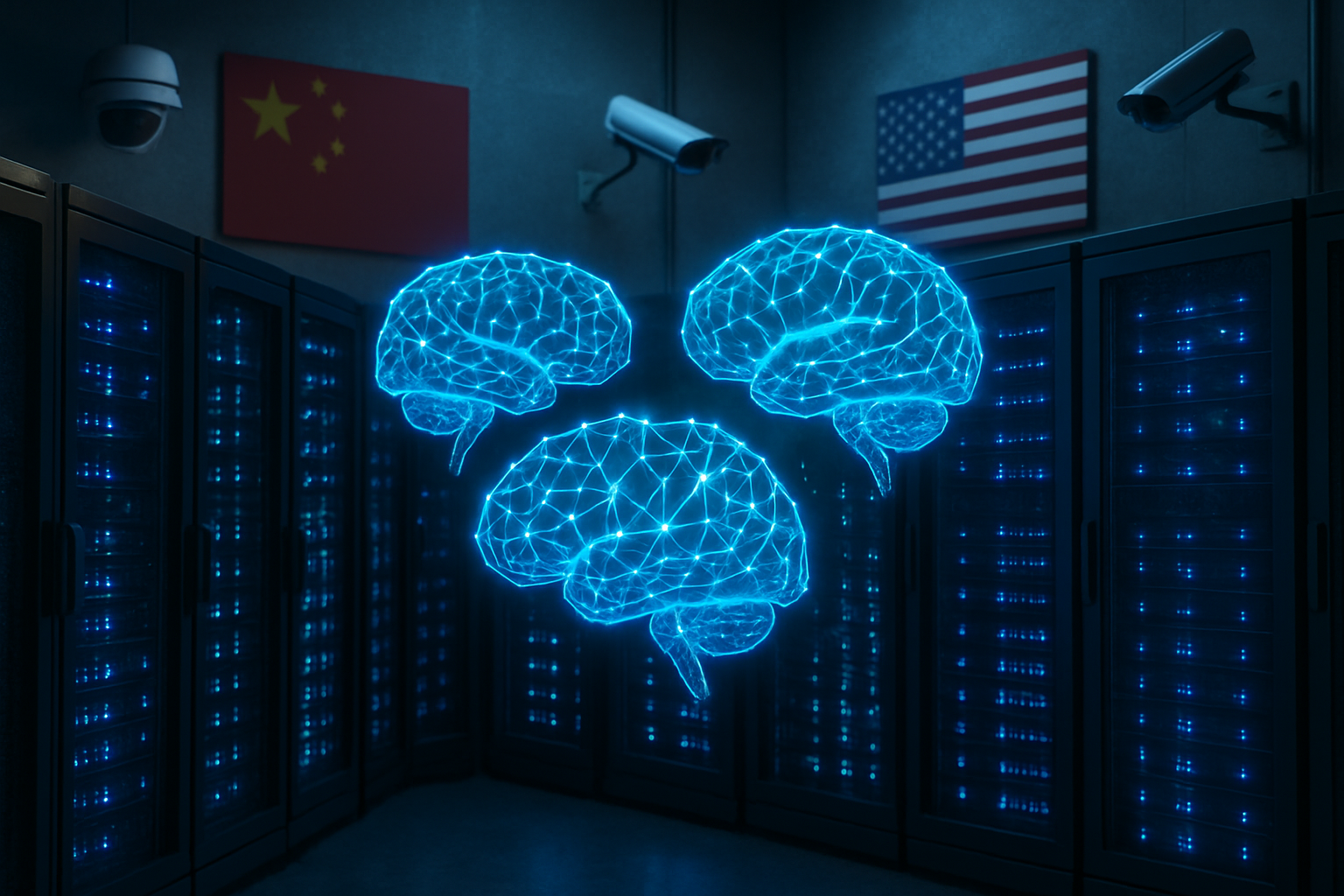
The global artificial intelligence landscape underwent seismic shifts in April 2026 as China's Zhipu AI open-sourced its flagship GLM-5.1 model while simultaneously raising API prices, Oxford scientists developed breakthrough heart failure prediction tools, and innovative AI platforms transformed creative industries worldwide.
These developments mark what industry experts are calling the "2026 AI Inflection Point" - the moment when artificial intelligence transitions from experimental technology to essential global infrastructure across multiple sectors simultaneously.
China's Strategic AI Gambit
Chinese artificial intelligence company Zhipu AI made headlines on April 8, 2026, by open-sourcing its latest flagship model GLM-5.1 while raising application programming interface (API) prices by 10 percent. This strategic move signals a significant shift towards monetizing advanced AI capabilities as competition with US rivals intensifies dramatically.
The decision represents Zhipu's second price increase this year, following a broader overhaul in February that lifted rates for coding subscription plans by more than 30 percent. This pricing strategy reflects the company's evolving approach to balancing open-source accessibility with commercial sustainability in an increasingly competitive global market.
"This represents a fundamental shift in how Chinese AI companies approach global competition - moving beyond simply competing with Western models to creating entirely new development frameworks,"
— Industry analysts tracking China's AI strategy
The open-sourcing of GLM-5.1 comes as China accelerates its comprehensive AI strategy through multiple coordinated initiatives, including demographic-driven automation to address the "4-2-1 problem" where single children support four aging parents and grandparents.
Revolutionary Healthcare Breakthroughs
Oxford University scientists achieved a groundbreaking medical advance with the development of an AI tool capable of predicting heart failure risk five years before symptoms develop. The technology demonstrated 86% accuracy in a comprehensive study of 72,000 patients across England.
More than 60 million people worldwide suffer from heart failure, a condition where the heart cannot pump blood effectively around the body. The ability to identify cases before they develop into full heart failure represents a major step forward in preventive medicine, allowing doctors to prepare better management strategies or even prevent the condition entirely.
This breakthrough joins a growing list of AI-powered medical innovations emerging in 2026, including Slovakia's AI system that identifies serious hormonal diseases from single hand photographs and Estonian hospitals using AI for stroke and radiation therapy treatments that save doctors hours while improving patient outcomes.
Creative Industry Transformation
The creative sector experienced its own AI revolution as WeryAI launched an integrated multi-model AI content creation platform, attracting nearly 3 million users since its official launch. The Singapore-based platform addresses common pain points in AI content production, such as fragmented tools, disconnected workflows, and rising costs.
WeryAI's approach centers on "complete creative production on a single platform," helping creators, designers, and marketing teams eliminate tool switching while improving visual content production efficiency. The platform integrates multiple high-performance AI models and editing tools, covering image generation, video production, post-production editing, music generation, and character creation.
Meanwhile, concerns about AI's impact on traditional creative professions continue to mount. The Anthropic team developed an AI model called "Mythos" that proved so effective at discovering security vulnerabilities that the company decided to restrict its availability to only select enterprises for system protection purposes.
Government AI Initiatives Accelerate
Slovakia's government approved the creation of a new Council for Digital Transformation and Artificial Intelligence, aimed at better coordinating digital policies and AI development. This initiative reflects a broader global trend of governments establishing dedicated AI governance frameworks to manage the technology's rapid advancement.
The council's formation demonstrates Slovakia's commitment to positioning itself among AI leaders while ensuring responsible development practices. This follows similar initiatives across Europe, where nations are implementing sophisticated regulatory frameworks balancing innovation with human welfare protection.
Infrastructure Challenges Drive Innovation
Despite remarkable advances, the AI industry continues to grapple with significant infrastructure constraints. The global semiconductor crisis has driven memory chip prices to surge sixfold, affecting major manufacturers including Samsung, SK Hynix, and Micron, with shortages expected to continue until 2027 when new fabrication facilities come online.
Paradoxically, these constraints are spurring innovation toward memory-efficient algorithms and sustainable deployment strategies that could potentially democratize AI access by requiring less computational power. This challenge-driven innovation is forcing developers to create more efficient systems rather than relying on brute-force computational approaches.
The Human-AI Collaboration Imperative
Successful AI implementations across various sectors share common characteristics: they enhance rather than replace human capabilities, maintain sustained human development commitment, ensure comprehensive stakeholder engagement, and demonstrate cultural sensitivity in their deployment.
Examples include Canadian AI teaching assistants that maintain critical thinking standards, Malaysia's world-first AI-integrated Islamic school that combines technology with traditional learning, and Singapore's WonderBot 2.0 heritage education system that preserves cultural knowledge while leveraging advanced technology.
"The future lies in sophisticated human-AI collaboration that amplifies human capabilities while preserving creativity, cultural understanding, and ethical reasoning that define human potential,"
— Technology policy experts analyzing successful integration models
Global Governance Frameworks Emerge
The rapid pace of AI development has prompted unprecedented international coordination on governance frameworks. The United Nations established an Independent Scientific Panel of 40 global experts under Secretary-General António Guterres, representing the first fully independent international AI assessment body.
European nations are leading regulatory innovation, with Spain implementing the world's first criminal executive liability framework for tech platforms, creating potential imprisonment risks for executives whose companies fail to meet safety standards. France has conducted AI cybercrime raids, while the European Union investigates potential Digital Services Act violations carrying penalties in the billions.
Economic Transformation Accelerates
The AI revolution is fundamentally reshaping business landscapes through what analysts term the "SaaSpocalypse" - the systematic elimination of hundreds of billions in traditional software market capitalization as AI systems demonstrate direct replacement capabilities for conventional solutions.
Major corporations continue massive investments despite infrastructure constraints, with Alphabet committing $185 billion to AI infrastructure in 2026 (the largest single-year corporate technology investment in history) and Amazon announcing plans exceeding $1 trillion for AI development.
Looking Forward: Critical Choices Ahead
Industry experts characterize April 2026 as a "civilizational choice point" - a critical juncture determining whether AI serves human flourishing and democratic values or becomes an exploitation tool beyond democratic accountability.
Success in navigating this transformation requires unprecedented coordination between governments, technology companies, educational institutions, and civil society. The challenge involves balancing innovation acceleration with safety governance, commercial interests with human welfare, and national competitiveness with international cooperation.
The window for effective coordinated action is narrowing rapidly, making the decisions made in 2026 crucial for establishing human-AI relationship patterns that will persist for decades. The most promising path involves treating AI as sophisticated amplification tools serving human goals rather than wholesale replacement mechanisms.
As artificial intelligence transitions from experimental applications to essential infrastructure, the stakes extend far beyond technological advancement to fundamental questions about how societies organize around human welfare, creativity, and authentic human relationships in an increasingly automated world.