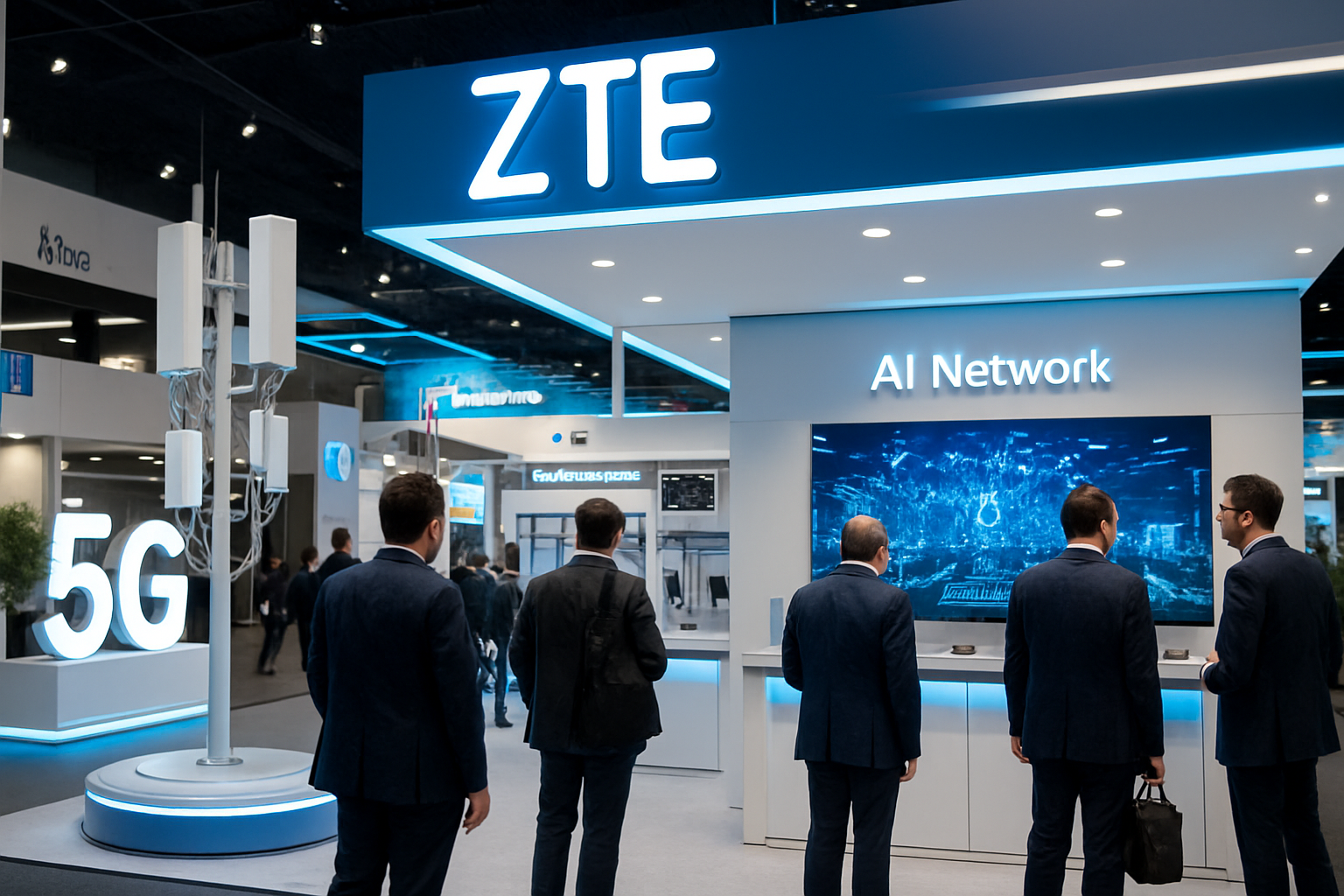
ZTE Corporation unveiled its comprehensive full-stack artificial intelligence innovations at Mobile World Congress (MWC) Barcelona 2026, demonstrating next-generation intelligent communication technologies that promise to reshape the global telecommunications landscape.
The Chinese telecommunications giant participated in key GSMA forums, sharing insights on Corporate Innovation, Intelligent Infrastructure, Connect AI, Tech4ALL, and Game Changer initiatives. The presentations occur during a critical period for the global telecommunications industry, as companies navigate the transition from experimental AI applications to essential infrastructure deployment.
Strategic AI Integration Across Networks
ZTE's MWC 2026 showcase represents the culmination of years of artificial intelligence research and development, focusing on practical implementations that enhance network performance, user experience, and operational efficiency. The company's full-stack approach integrates AI capabilities from the network core to edge devices, creating a comprehensive ecosystem of intelligent communication solutions.
According to industry analysts, ZTE's timing is particularly strategic given the unprecedented global demand for AI-powered telecommunications infrastructure. The company's demonstrations align with broader industry trends showing the transition from 5G deployment to AI-enhanced network optimization, addressing critical challenges in network management, resource allocation, and user service delivery.
Industry Context and Global Competition
The MWC 2026 presentations occur amid intense global competition in the AI telecommunications sector. Recent developments show Chinese companies like ZTE increasingly challenging Western technological dominance through innovative AI implementations and strategic partnerships. Samsung Electronics recently achieved critical 6G technology milestones, while Pakistan finalized comprehensive mobile device manufacturing policies ahead of its March 5G spectrum auction.
"ZTE's full-stack AI approach represents a fundamental shift toward intelligent network architecture that can adapt and evolve with user demands in real-time."
— Industry Technology Analyst
The company's strategic focus on AI integration addresses several critical industry challenges, including the global semiconductor shortage that has driven memory chip prices up sixfold, affecting Samsung, SK Hynix, and Micron operations. ZTE's solutions demonstrate how artificial intelligence can optimize network performance even within constrained hardware environments.
Intelligent Infrastructure Revolution
ZTE's Intelligent Infrastructure initiatives showcase how AI can transform traditional telecommunications networks into adaptive, self-optimizing systems. The technology encompasses network slicing optimization, predictive maintenance algorithms, and autonomous resource management capabilities that reduce operational costs while improving service quality.
The Connect AI framework demonstrates ZTE's commitment to creating seamless integration between artificial intelligence and communication networks. This approach enables real-time network optimization, intelligent traffic routing, and predictive capacity management that can anticipate user demands before they impact network performance.
Industry experts note that ZTE's AI implementations address critical pain points in modern telecommunications networks, particularly the challenge of managing increasingly complex 5G deployments while preparing for eventual 6G transition. The company's solutions provide practical pathways for network operators seeking to leverage artificial intelligence without completely overhauling existing infrastructure.
Global Impact and Future Implications
ZTE's MWC 2026 demonstrations occur during what industry leaders describe as the "2026 AI Infrastructure Inflection Point," where artificial intelligence transitions from experimental technology to essential telecommunications infrastructure. The company's full-stack approach provides a template for how telecommunications providers can integrate AI capabilities across their entire service portfolio.
The Tech4ALL initiative specifically addresses global digital divide challenges, demonstrating how AI-powered telecommunications solutions can provide enhanced connectivity and services to underserved regions. This approach aligns with broader international efforts to ensure equitable access to advanced communication technologies and artificial intelligence benefits.
Strategic Partnerships and Ecosystem Development
ZTE's participation in GSMA forums highlights the company's commitment to industry-wide collaboration and standard-setting initiatives. The Game Changer presentations specifically focus on breakthrough technologies that could fundamentally alter telecommunications industry dynamics over the coming decade.
The company's Corporate Innovation framework demonstrates how artificial intelligence can drive new business models and service offerings within the telecommunications sector. These innovations include AI-powered network analytics, intelligent customer service systems, and predictive maintenance solutions that reduce operational costs while improving service reliability.
Technological Differentiation and Market Position
ZTE's full-stack AI approach differentiates the company from competitors by providing comprehensive solutions rather than point technologies. This strategy addresses customer demands for integrated AI capabilities that work seamlessly across network components, from core infrastructure to edge devices and user applications.
The timing of ZTE's MWC 2026 presentations is particularly strategic given ongoing global discussions about AI governance, telecommunications security, and technology sovereignty. The company's demonstrations provide practical examples of how AI can enhance network capabilities while addressing regulatory requirements and security considerations.
"The integration of artificial intelligence into telecommunications infrastructure represents the most significant technological transformation since the introduction of digital networks."
— Telecommunications Industry Expert
Implementation Challenges and Solutions
ZTE's presentations acknowledge the significant challenges facing AI implementation in telecommunications networks, including the current global semiconductor shortage, regulatory complexity, and the need for extensive workforce retraining. The company's solutions address these challenges through modular deployment approaches that allow gradual AI integration without disrupting existing operations.
The intelligent communication technologies demonstrated at MWC 2026 provide practical pathways for network operators to begin AI implementation despite infrastructure constraints and budget limitations. ZTE's approach emphasizes backward compatibility and seamless integration with existing network components.
Future Outlook and Industry Transformation
ZTE's MWC Barcelona 2026 presentations represent a pivotal moment in telecommunications industry evolution, as companies transition from theoretical AI discussions to practical implementation strategies. The company's full-stack approach provides a comprehensive framework for how artificial intelligence can transform every aspect of telecommunications operations.
The success of ZTE's AI integration initiatives will likely influence broader industry adoption patterns and competitive dynamics. As telecommunications providers face increasing pressure to deliver enhanced services while managing operational costs, AI-powered solutions like those demonstrated by ZTE become increasingly critical for maintaining market competitiveness.
The company's commitment to intelligent communication technologies positions ZTE as a key player in shaping the future of global telecommunications infrastructure, particularly as the industry prepares for the eventual transition from 5G to 6G networks and the integration of artificial intelligence becomes essential rather than optional.